
Political InstitutionsA government website may look like a single service, but keeping it available and useful can involve agencies, central technology teams, contractors and oversight bodies. Understanding their roles makes it easier to ask who is responsible when a service fails.
Read article · 4 min↗

Political InstitutionsNational, regional, and local governments may all make decisions that affect daily life. Learn how federal and unitary systems assign authority, where their arrangements overlap, and why the formal rules do not tell the whole story.
Read article · 4 min↗

Political InstitutionsTreaty-making is rarely a single decision. Executives usually negotiate and sign agreements, while legislatures may authorize consent, review commitments or pass laws needed to carry them out. The balance varies by country, by type of agreement and by the rules that apply to each treaty.
Read article · 4 min↗
Political InstitutionsEmergency powers can help governments respond quickly when ordinary procedures are too slow. Their legitimacy depends not only on the crisis but also on who may invoke them, what they permit, how long they last, and how other institutions can challenge their use.
Read article · 4 min↗

Political InstitutionsA law can set a goal, but carrying it out takes ongoing work. Executive agencies turn statutory instructions into programs, rules and decisions. Their authority has limits, and several institutions help oversee how they use it.
Read article · 4 min↗

Political InstitutionsOmbuds institutions offer a way to examine complaints about how public bodies treat people. Their powers vary, but they commonly review administrative decisions and procedures, seek explanations from agencies, and recommend changes. Understanding their role helps clarify both the value and the limits of an ombuds investigation.
Read article · 4 min↗

Political InstitutionsNational audit institutions help the public and legislators understand how government money is recorded and used. This guide explains what they examine, how audits work, and why a finding is not always proof of waste or wrongdoing.
Read article · 3 min↗
Political InstitutionsA public budget is more than a list of costs. It is a set of choices about what government may raise, spend and prioritize. Learn how legislatures examine budget proposals, authorize spending and check what happens after the money is allocated.
Read article · 4 min↗
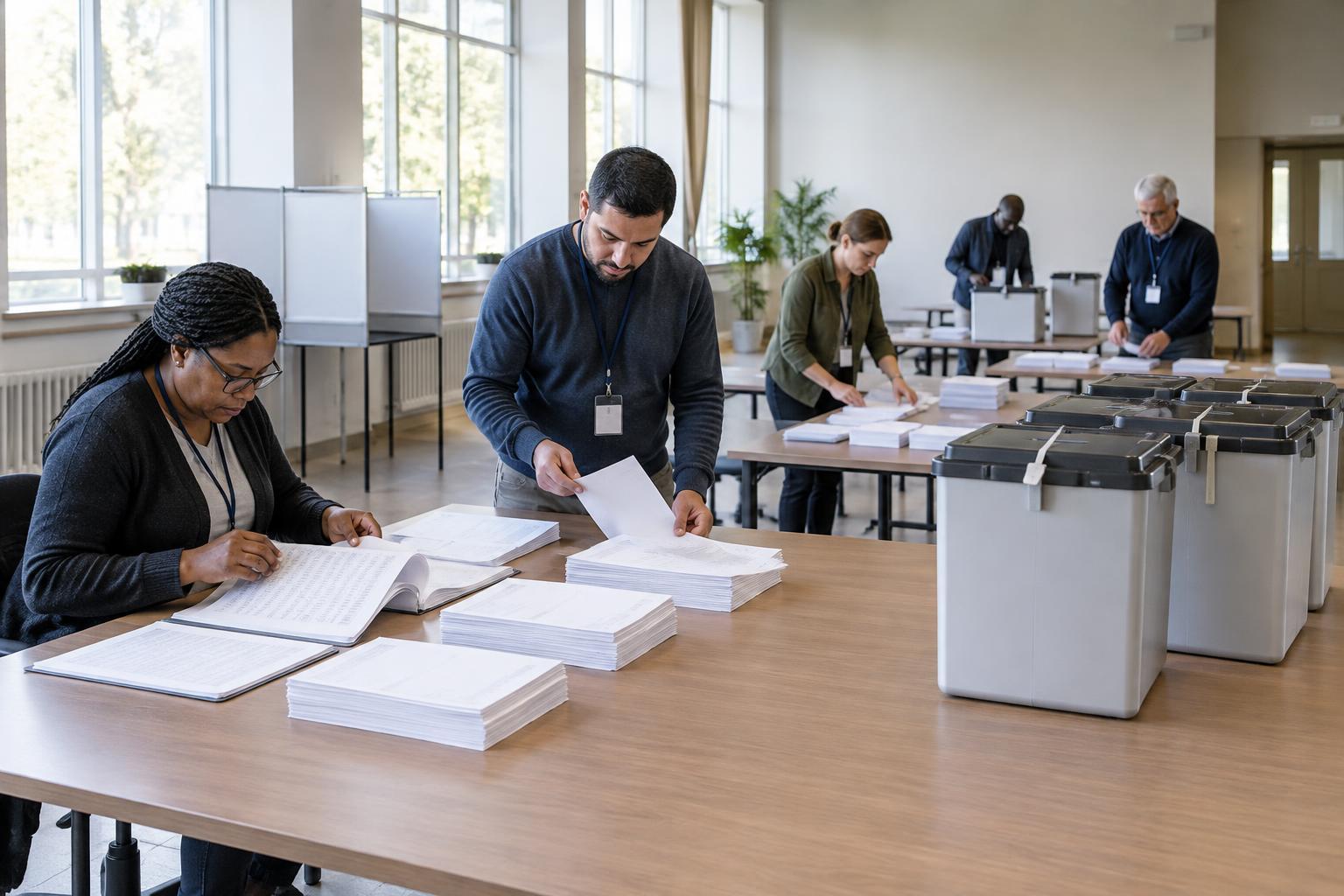
Political InstitutionsElections depend on more than candidates and voters. Election management bodies turn election rules into practical steps, from maintaining voter lists and preparing ballots to counting votes and publishing results. Their structure varies by jurisdiction, but the questions of competence, impartiality and accountability arise everywhere.
Read article · 3 min↗
Political InstitutionsJudicial independence helps courts decide cases according to law rather than pressure from powerful people or institutions. Learn what it means, why it matters, and how appointment rules, job security, court administration and accountability measures can work together to protect it.
Read article · 4 min↗
Political InstitutionsConstitutional review is the process of assessing whether a law or government action is consistent with a constitution. Courts use different procedures to conduct that review, and their powers and remedies vary across political systems.
Read article · 4 min↗
Political InstitutionsBoth executive orders and laws can shape what a government does, but they come from different institutions and have different limits. Understanding who issues them, where their authority comes from, and how they can be changed helps make sense of public policy debates.
Read article · 3 min↗

Political InstitutionsPolitical appointees and career civil servants often work on the same public problems, but they serve different purposes. Understanding how each group enters government, exercises authority and maintains continuity helps explain both democratic control and impartial administration.
Read article · 4 min↗
Political InstitutionsVotes of no confidence and impeachment can both challenge a leader’s hold on office, but they answer different questions. One usually tests whether a government still has legislative support; the other addresses alleged misconduct through a formal process. The details depend on each country’s constitution.
Read article · 4 min↗
Political InstitutionsIn a parliamentary system, an election determines the makeup of the legislature, but it does not always settle who will govern. Learn how party negotiations, legislative confidence and the head of state’s formal role turn election results into a government.
Read article · 4 min↗
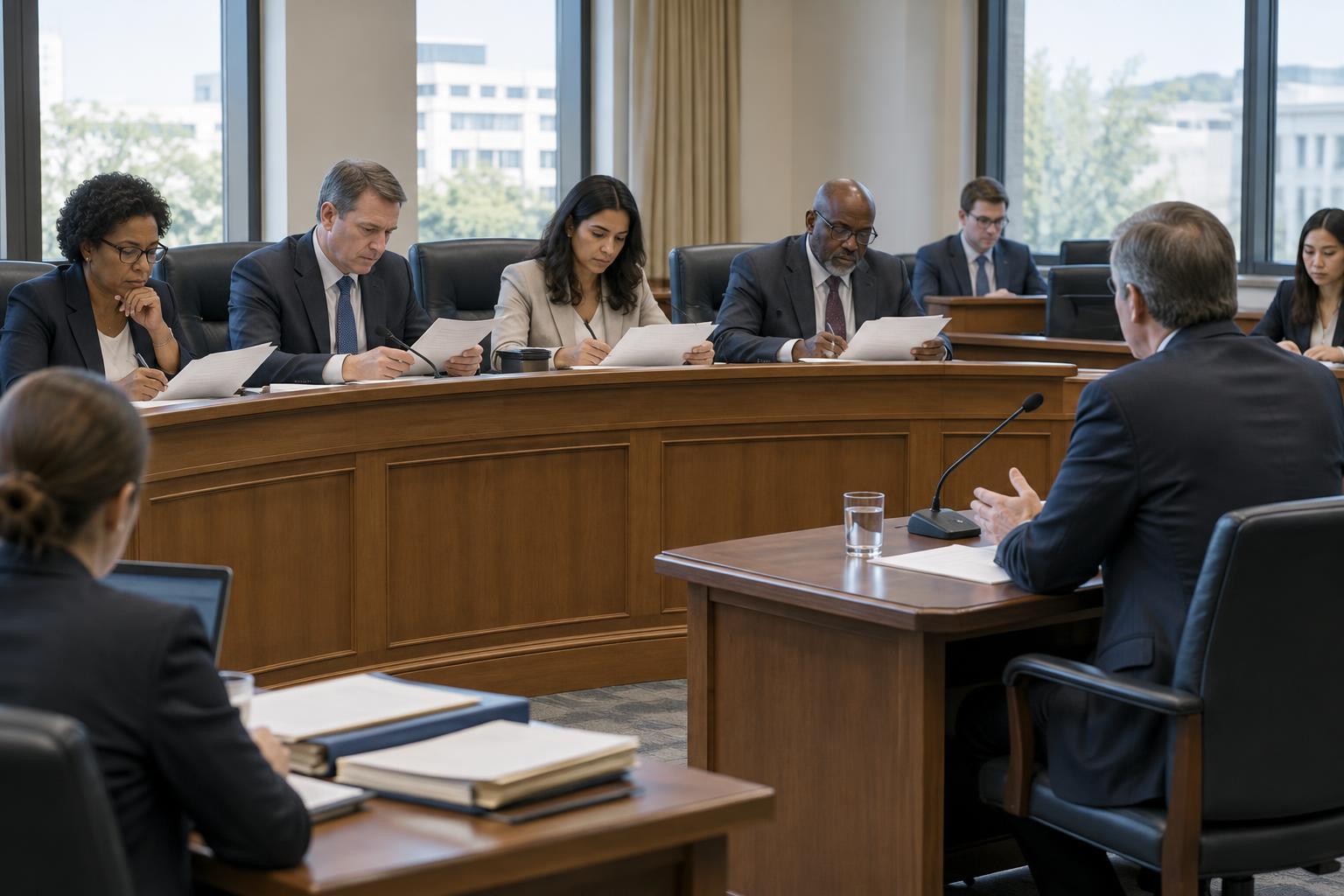
Political InstitutionsLegislative committees give lawmakers a smaller setting in which to examine bills, question officials and investigate public problems. Their inquiries can clarify facts and expose gaps in policy, but their findings still need to be assessed in light of the evidence and the rules under which each committee works.
Read article · 4 min↗
Political InstitutionsA bill rarely becomes law after a single vote. This guide follows the common stages of legislative approval, from drafting and committee review to final votes, executive action and publication, while explaining why the process differs across political systems.
Read article · 4 min↗
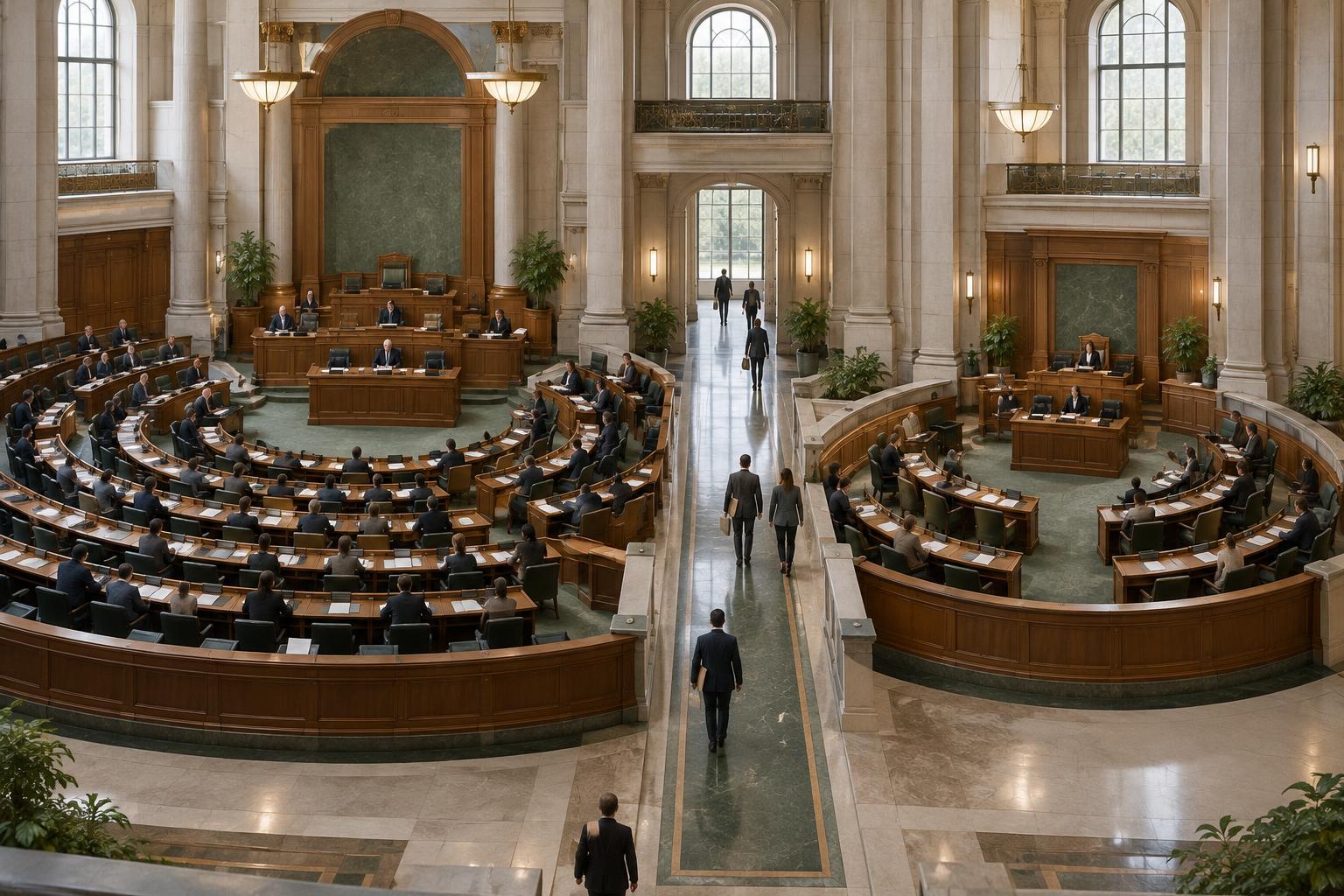
Political InstitutionsSome legislatures have one chamber; others divide lawmaking between two. The difference is not simply the number of votes a bill needs. A second chamber can change who is represented, how proposals are reviewed, and where disagreements must be resolved. Its effects depend on how members are chosen and what powers each chamber holds.
Read article · 4 min↗

Political InstitutionsA head of state represents the continuity of the state, while a head of government directs its day-to-day political work. In some systems one person holds both roles; in others, a president or monarch serves alongside a prime minister. The distinction helps explain who speaks for a country, who makes policy and who is politically accountable.
Read article · 4 min↗
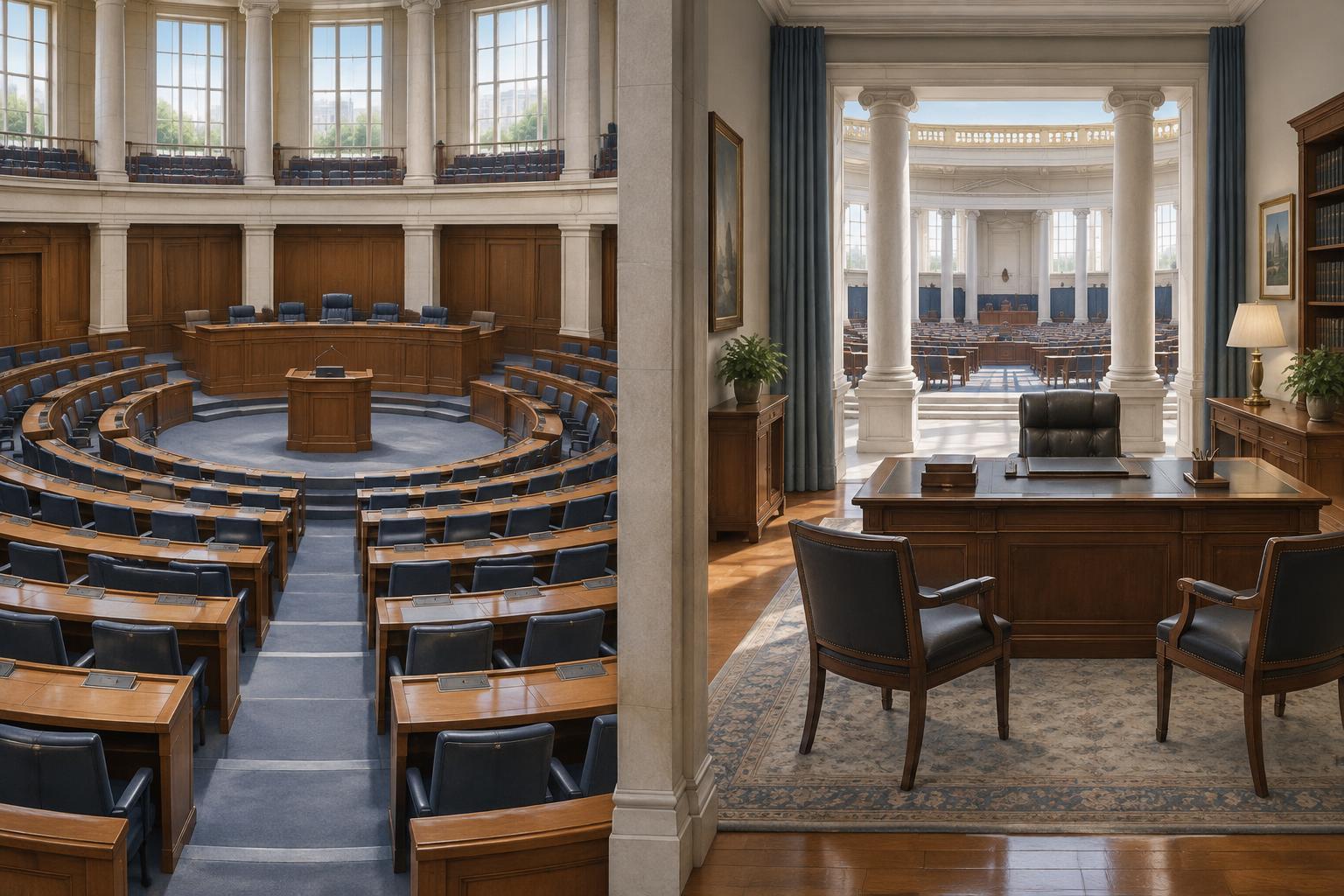
Political InstitutionsParliamentary and presidential systems differ most clearly in how an executive takes office, stays in office and relates to the legislature. Understanding those rules makes it easier to compare political institutions without assuming that one model works the same way everywhere.
Read article · 4 min↗
Political InstitutionsSeparation of powers divides public authority among institutions. Checks and balances give those institutions ways to limit or question one another. This guide explains the difference, shows how the ideas work in practice, and considers why their design varies across political systems.
Read article · 4 min↗
Political InstitutionsA constitution sets out the basic framework of government, places limits on public power, and provides ways to change the system. Its practical effect depends not only on its text, but also on institutions, interpretation, and whether people in power follow its rules.
Read article · 4 min↗