Two related ideas, not the same idea
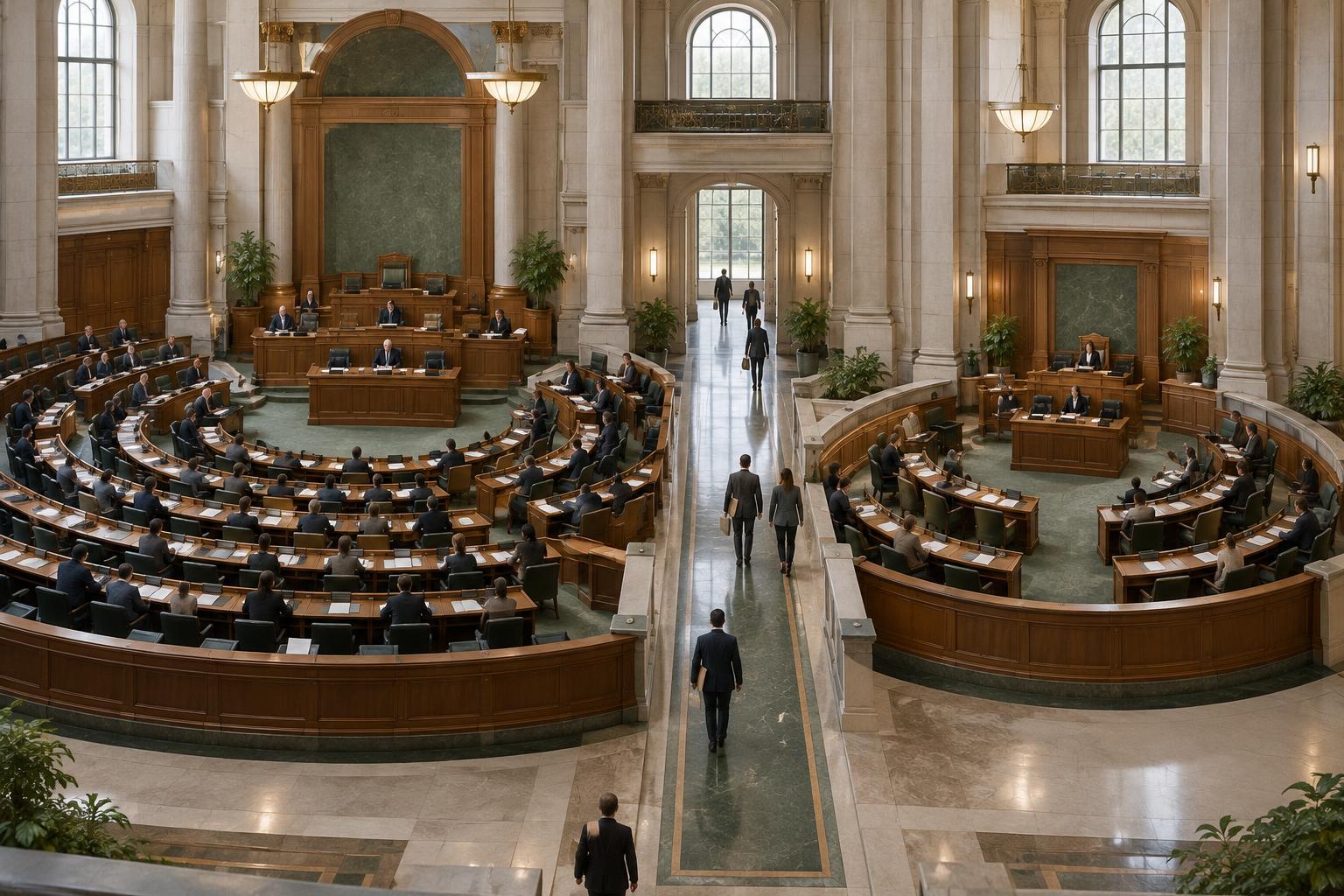
Separation of powers is the idea that no single institution should control every major function of government. A common starting point is to distinguish making laws, carrying them out, and resolving disputes about what the law means. These functions are often associated with a legislature, an executive, and courts. Real governments are more complicated, but the distinction helps explain who is responsible for different decisions.
Checks and balances are the tools that allow institutions to restrain, review, or challenge one another. Separation answers the question, “Who has which powers?” Checks and balances answer, “What can happen if one institution uses its powers improperly or exceeds its authority?” A system can divide responsibilities on paper yet provide few effective ways to hold decision-makers accountable. Conversely, oversight can exist even where the branches are not sharply separated.
What the institutions do
A legislature typically debates and passes laws, approves public spending, and questions the government about its actions. An executive typically administers laws, directs public agencies, and makes day-to-day governing decisions within its authority. Courts resolve legal disputes and may decide whether officials have acted lawfully. The exact boundaries depend on a country’s constitution, laws, and political practices.
Other bodies can also matter. Independent auditors, election administrators, ombuds offices, and civil service institutions may provide scrutiny or carry out specialized tasks. Their authority and independence vary. These bodies do not replace the main branches, but they can make government decisions easier to examine and contest. Understanding an institution therefore requires more than knowing its name: it helps to ask what powers it has, how its leaders are chosen, and to whom it must answer.
How checks and balances work
Checks can operate at several stages of a decision. Before a policy takes effect, a legislature may need to approve a budget or a proposed law. During implementation, legislative committees may question officials or request information. After a decision, a court may hear a challenge to an official action if the legal system gives it that role. A check is not necessarily a veto; sometimes its value lies in requiring an explanation, creating a public record, or providing a route to correction.
These tools are usually reciprocal but not identical. The executive may propose legislation or decline to approve a bill, depending on the system. Legislatures may confirm appointments, investigate agencies, or remove officials through procedures that often have demanding requirements. Courts may review government conduct, while rules for appointing judges or changing laws can shape the courts’ role. Each tool has limits, and the details vary widely. Calling something a “check” does not tell us whether it is easy to use, politically feasible, or effective in practice.
Different systems draw different lines
In a presidential system, the executive and legislature generally have separate sources of political authority. That arrangement can give each institution room to resist the other, but disagreement may also slow decisions. In a parliamentary system, the executive is usually drawn from the legislature and depends on its support to remain in office. The branches are therefore less separate in their membership, yet legislative scrutiny, opposition parties, courts, and other institutions can still constrain the government.
Federalism adds another possible division by assigning authority to national and regional governments. It is not the same as separating legislative, executive, and judicial functions, but it can create additional opportunities for review and disagreement. None of these arrangements guarantees good government on its own. Formal rules interact with political parties, administrative capacity, access to information, and whether officials accept the legitimacy of institutional limits.
Why the ideas matter to citizens
Dividing authority can reduce the risk that a temporary majority or a powerful officeholder controls every step of a decision. Checks may expose mistakes, protect established procedures, and make it possible to challenge official action. They can also create delays or unclear lines of responsibility. When institutions disagree, the disagreement may reflect a system working as designed, though it may also reveal a rule that needs clarification.
A useful way to follow a public decision is to ask four questions: Who proposed it? Who had authority to approve it? Who will carry it out? Who can review or challenge it? The answers show where power sits and where accountability might be sought. Separation of powers is not simply a diagram of three branches. It is an ongoing arrangement of responsibilities and limits, whose practical value depends on how institutions use them.