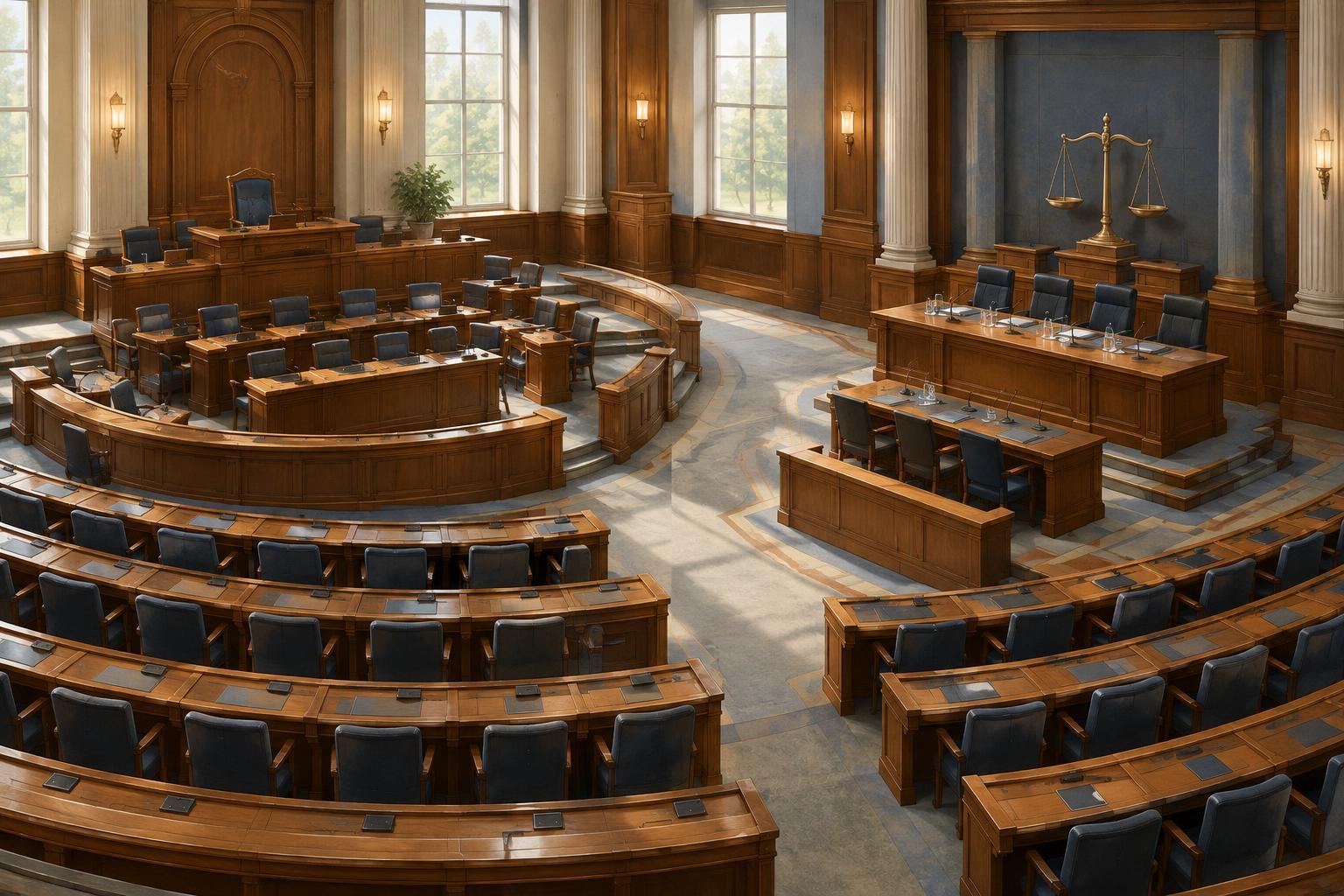
An election chooses a parliament, not always a government
In a parliamentary system, the executive branch depends on the support, or at least the continued tolerance, of the legislature. Voters generally elect members of parliament rather than voting separately for a head of government. After the election, parties must work out who can lead an administration capable of governing under the country’s constitutional rules.
If one party holds a majority of seats, the path may be relatively straightforward: its leader is likely to become prime minister and choose a cabinet. But a majority of votes does not necessarily translate into a majority of seats, and no party may win enough seats to govern alone. The election result sets the possibilities; it does not always provide a complete answer.
Parties test possible governing arrangements
When no party has a majority, party leaders may negotiate a coalition. Coalition partners can agree on a shared policy program, divide cabinet responsibilities and settle procedures for resolving disagreements. These talks matter because a government needs more than an agreement on who becomes prime minister: it needs a workable way to make decisions and pass legislation.
A coalition is not the only option. One party, or a small group of parties, may form a minority government if other legislators are willing to support it on essential votes or abstain rather than vote against it. Support can be set out in an agreement or negotiated issue by issue. A minority government is therefore not necessarily a government that immediately lacks authority; its survival depends on how parliamentary support is maintained.
The head of state and parliament have distinct roles
Many parliamentary systems have a head of state, such as a monarch or president, who formally appoints the prime minister. The precise procedure differs across countries. In some, the head of state consults party leaders before making an appointment. In others, parliament first selects or approves a candidate. Where constitutional conventions guide the choice, the central question is usually who can command sufficient parliamentary support, not whom the head of state personally prefers.
Parliament’s role may be expressed through an investiture or confidence vote. In systems that require such a vote, a proposed government must win the level of support specified by the rules before taking office or continuing in office. Elsewhere, a government can begin without an initial confidence vote but remains vulnerable to a later vote of no confidence. Rules about abstentions, voting thresholds and which chamber has authority can change the outcome, so the same election result may lead to different negotiations under different constitutions.
Formation can take time
Negotiations sometimes end quickly, but they can also stall. Parties may disagree over policy, cabinet positions or whether they can trust one another to honor an agreement. A party with many seats may still struggle to form a government if it cannot find partners or secure enough tolerance from other legislators. Conversely, several smaller parties may be able to govern together if they can maintain a parliamentary majority.
While a new government is being assembled, an outgoing cabinet may remain in office as a caretaker. The scope of a caretaker government’s actions varies by country and convention, but the arrangement helps ensure that routine governing continues during the transition. If attempts to form a government fail, the rules may allow another candidate to try or, in some circumstances, permit or require a new election. A fresh election is not an automatic consequence of every unsuccessful round of talks.
Confidence continues after appointment
Government formation does not end the relationship between cabinet and parliament. A parliamentary government must continue to manage legislative support for budgets, major proposals and other votes. If it loses a formal confidence vote, it may have to resign or seek an election, depending on the rules. Some systems use a constructive vote of no confidence, which requires legislators to agree on a replacement leader before removing the incumbent.
The useful distinction is between holding office and being able to govern. Formal appointment gives a cabinet its position, while parliamentary support makes its program viable. Looking at both helps explain why a party can win the most seats yet remain outside government, why a minority cabinet can last and why negotiations after an election are a normal part of parliamentary democracy.