Start with the source of executive authority
The executive is the part of government responsible for directing administration and carrying out public policy. Parliamentary and presidential systems organize its authority differently. In a parliamentary system, a prime minister and cabinet normally govern because they have the confidence of the legislature, or at least its elected lower chamber. In a presidential system, a president holds an executive office with a term established separately from the legislature’s term.
This distinction is about institutional relationships, not simply job titles. Some countries have a president whose duties are largely ceremonial and a prime minister who leads the government. Others have both offices with substantial powers. To understand a particular system, ask who directs the cabinet, who can remove that person from office, and whether the executive must retain legislative confidence.
How leaders take office and remain there
In a parliamentary system, voters generally elect legislators, and the composition of the legislature shapes who can form a government. A party with enough seats may govern alone; otherwise, parties may negotiate a coalition. The head of state may formally appoint the prime minister, but the government’s ability to stay in office depends on legislative support under the country’s rules.
That support can be tested through a confidence vote or a vote of no confidence. Losing such a vote may require a government to resign, prompt an attempt to form a new government, or lead to an election, depending on the constitution and parliamentary procedures. A change of prime minister does not always require voters to elect a new legislature.
In a presidential system, the president is typically elected through a process distinct from legislative elections. The president does not ordinarily leave office merely because legislators reject a bill or oppose an administration’s program. Removal before the end of a term generally requires a separate constitutional process with a higher threshold than an ordinary policy vote. A fixed term therefore gives the executive a different kind of continuity, though it does not guarantee political support.
Working with the legislature
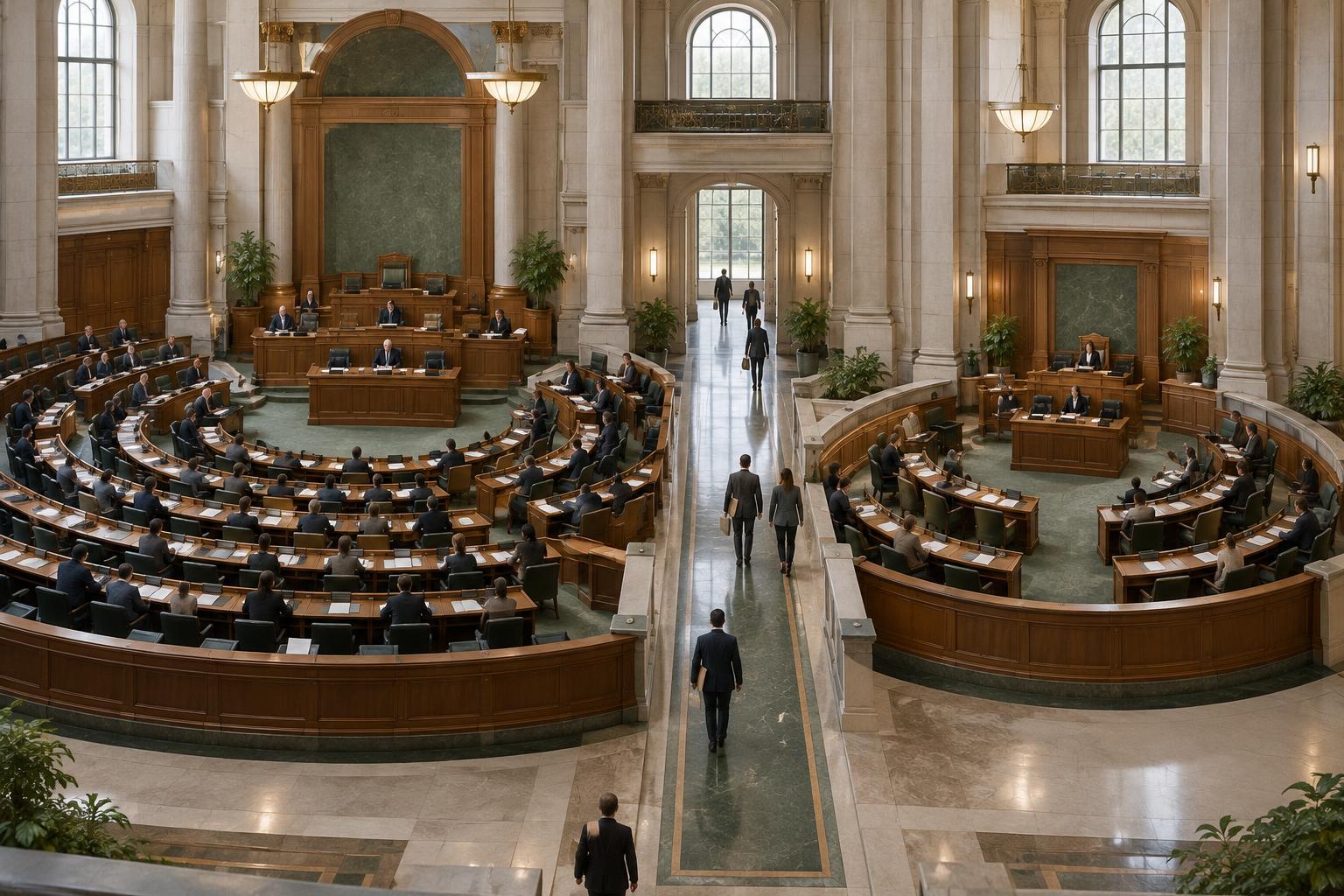
Parliamentary executives are closely linked to the legislature. Ministers are often drawn from its members, though eligibility rules vary. A government that commands a reliable majority may be well placed to pass its legislative program. But confidence does not mean that every proposal will succeed: coalition partners, internal party disagreements, committees and an upper chamber may all affect what becomes law.
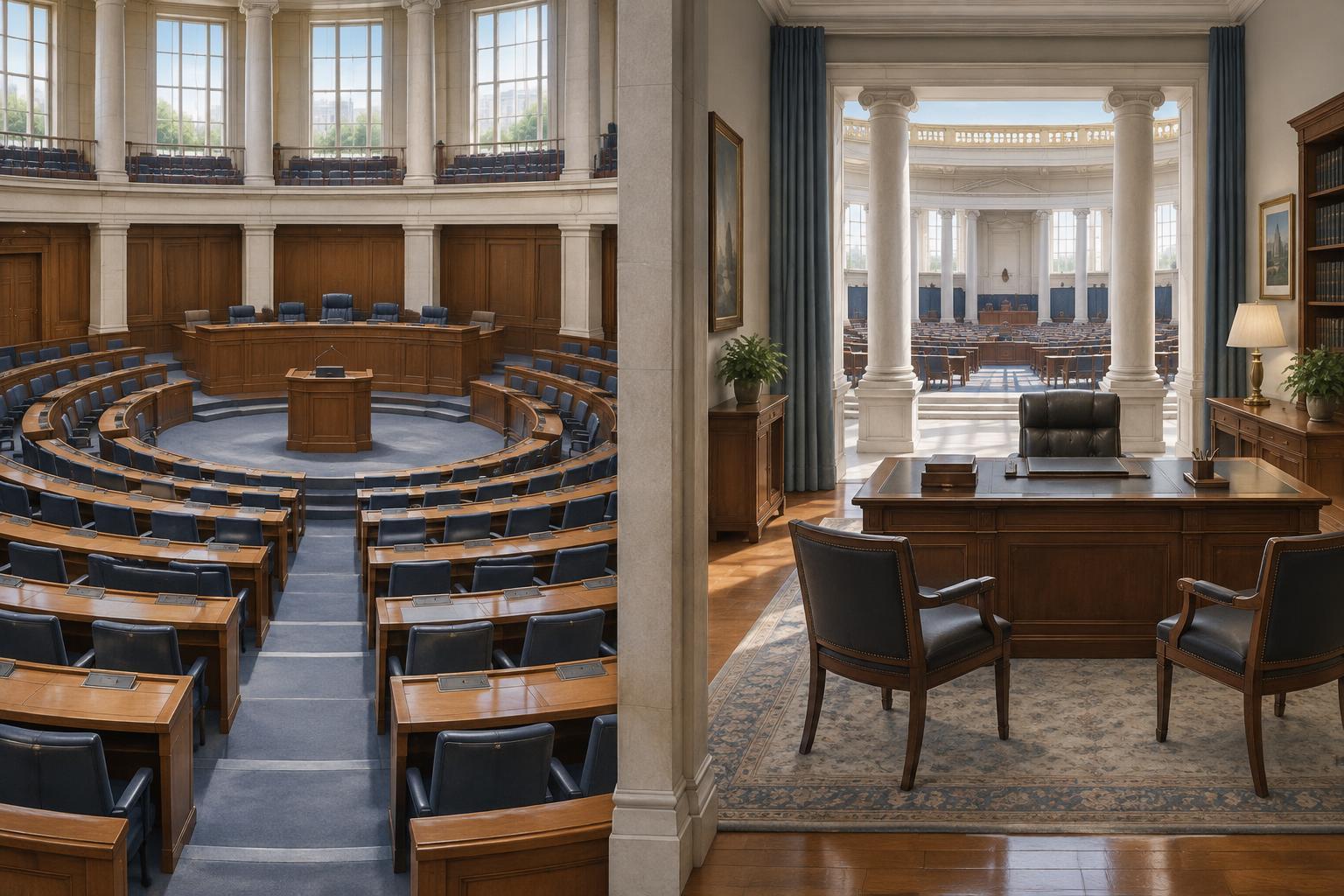
Presidential systems separate the executive’s tenure from the legislature’s confidence. A president may propose policies and exercise powers assigned to the office, but usually needs legislators to enact statutes and approve public spending. When the president and a legislative majority disagree, bargaining may be necessary, and some proposals may stall. That outcome reflects the distribution of authority; it is not, by itself, evidence that the system has stopped functioning.
Both models place limits on executives. Courts, legislatures, elections, audit bodies and constitutional rules can constrain government action, although their powers differ by country. The label “parliamentary” or “presidential” is a starting point, not a complete description of accountability.
Why neither model predicts every outcome
It is tempting to say that parliamentary systems are always flexible and presidential systems are always stable. The more precise point is that they handle some conflicts differently. Parliamentary rules can allow a change of government without waiting for a fixed executive term to expire. Presidential rules can allow a president to remain in office despite losing legislative allies. Either arrangement can face prolonged disputes over policy.
Political parties and electoral rules matter as well. A cohesive parliamentary majority may give a prime minister considerable room to act, while a fragmented parliament may require continuing negotiation. A president facing a cooperative legislature may advance an agenda more readily than one facing strong opposition. Written powers, established practices and the independence of other institutions also shape what an executive can do in practice.
A practical way to compare systems
When examining a country, follow a few institutional questions rather than relying on its leader’s title. How is the chief executive selected? Is the cabinet answerable to the legislature? What can bring the executive’s term to an early end? Who can introduce, amend and approve legislation? What happens if the executive and legislature cannot agree?
These questions also help identify arrangements that do not fit neatly into either category. In a semi-presidential system, for example, a president and a prime minister may both hold meaningful authority, while the government remains accountable to the legislature. Their respective roles depend on constitutional rules and political circumstances. The central lesson is to trace where executive authority comes from, how it is exercised and who can hold its holders to account.