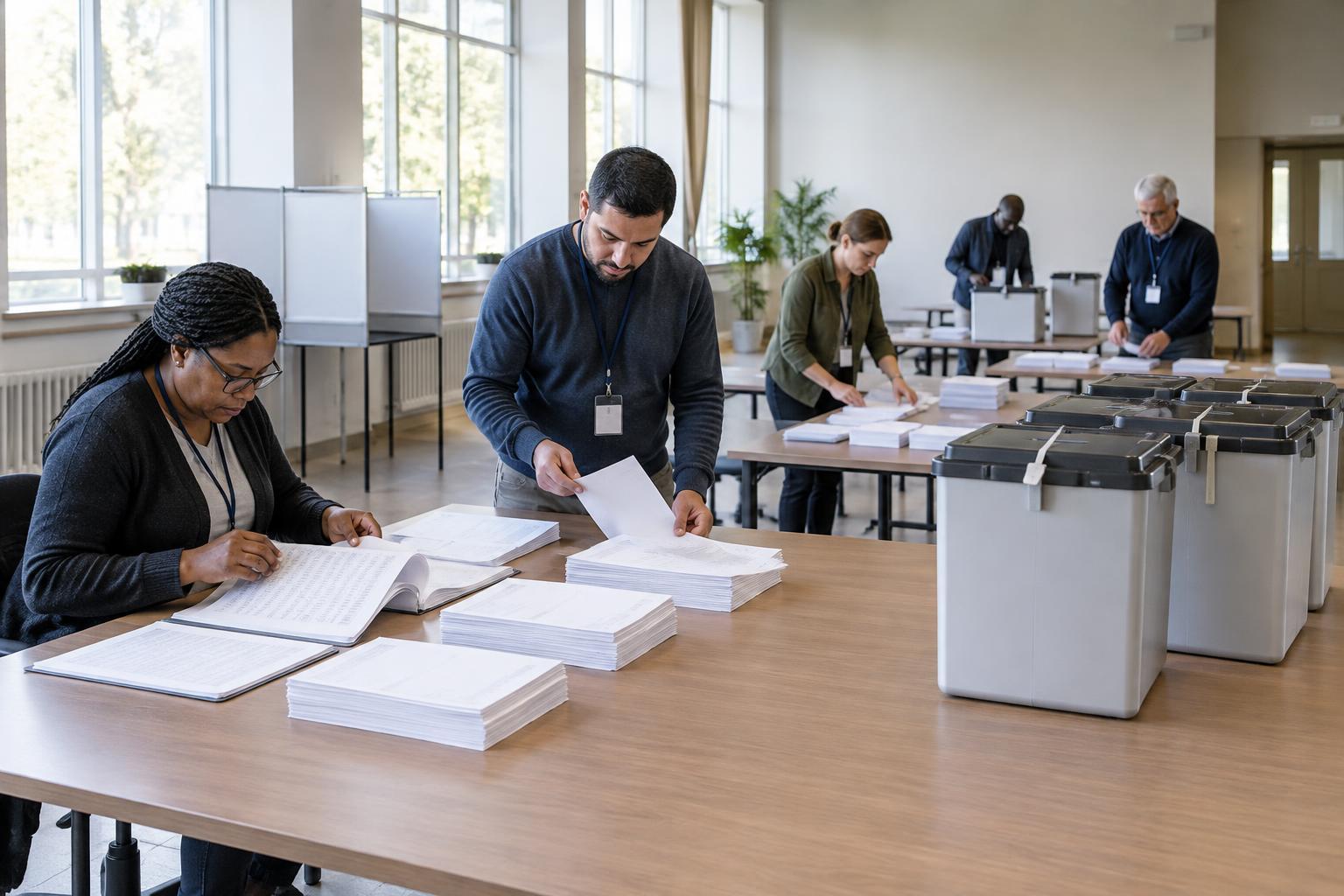
What is an election management body?
An election management body, often called an EMB, is a public institution responsible for organizing some or all of an election. Depending on the jurisdiction, it may be a permanent commission, a government office, a network of local officials or a combination of these. Its central task is administrative: turning election law into a process that voters, candidates and election workers can follow.
An EMB does not necessarily write the laws governing elections. Legislatures typically set the broad rules, while courts or other designated bodies may resolve legal disputes. The boundaries are not identical everywhere, however. To understand who runs a particular election, it helps to ask three separate questions: Who sets the rules? Who carries them out? Who reviews contested decisions?
From voter lists to results
Election administration begins well before voting day. An EMB may register voters or maintain voter lists, identify polling places, recruit and train staff, prepare ballots and equipment, and explain procedures to the public. It may also administer rules for candidate registration or campaign reporting. Some duties may instead belong to other agencies, so the name of an election authority alone does not reveal its full powers.
During voting, administrators must apply eligibility rules, provide the required voting options, protect ballot secrecy and document what happens when procedures cannot be followed as planned. After polls close, they oversee the secure handling and counting of ballots, reconcile records and publish results according to law. Where recounts, audits or certification are required, those steps help distinguish an initial count from an official outcome.
Why structures differ
Some systems assign national elections to a central body that sets procedures for the whole country. Others give regional or local authorities substantial responsibility. A decentralized system may allow officials to adapt to local conditions, but it also needs coordination so that comparable rules are applied consistently. A centralized system may simplify common standards, while still relying on local staff to operate polling places.
EMBs also differ in how their leaders are selected and how long they serve. Appointment procedures, budgets and staffing rules can affect whether an institution has the capacity to do its work without improper pressure. No organizational chart guarantees good administration by itself. Clear legal authority, trained personnel, reliable records and workable plans for unexpected problems all matter.
Independence and accountability work together
Election officials need enough independence to apply the rules fairly, even when a decision disappoints a candidate or party. Independence does not mean operating without scrutiny. Published procedures, documented decisions, observers where permitted, audits and opportunities to challenge mistakes can make the process easier to examine. The appropriate forms of oversight depend on the legal system, but the underlying aim is similar: decisions should be explainable and reviewable.
A disagreement about an election can involve different kinds of questions. Was a ballot handled according to procedure? Was a candidate eligible under the law? Did an administrator exceed their authority? EMBs may answer some administrative questions directly, while courts or other review bodies decide others. Separating these roles helps the public understand why an election official cannot settle every dispute alone.
How to assess an election authority’s work
When reading about an election, start with the institution’s actual responsibilities rather than assuming it controls every stage. Look for its published instructions on registration, voting, counting and the release of results. If a procedure changes, ask what rule permits the change and how voters and participants were informed. A delay or correction is worth examining, but its meaning depends on the process and the evidence available.
Voters can also distinguish between a reported result, an official certification and a final resolution of any challenges. These may occur at different stages. Knowing which body performs each step makes election news easier to interpret. It also makes accountability more precise: the useful question is not simply whether “officials” ran an election well, but which institution was responsible for a particular decision and how that decision can be checked.