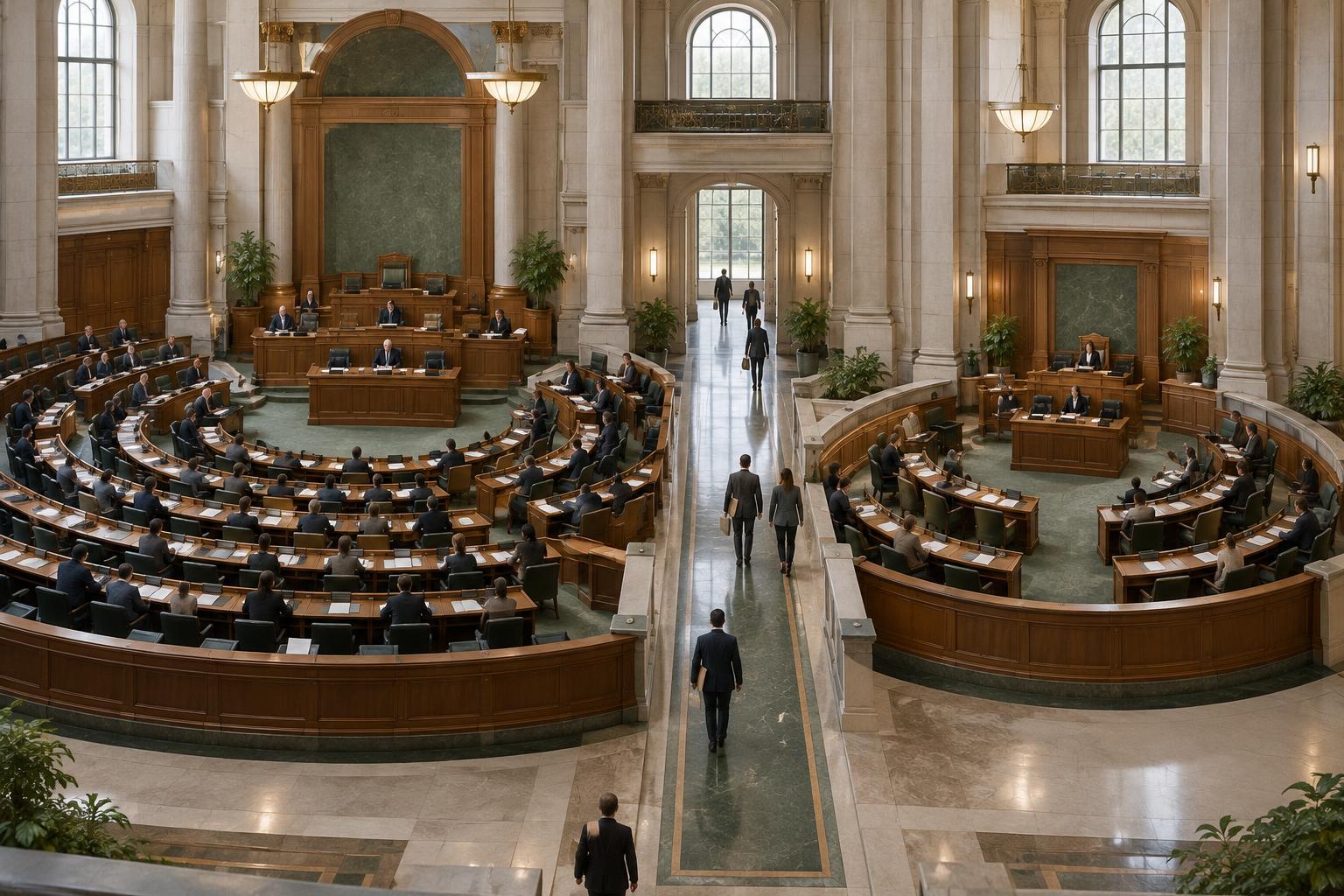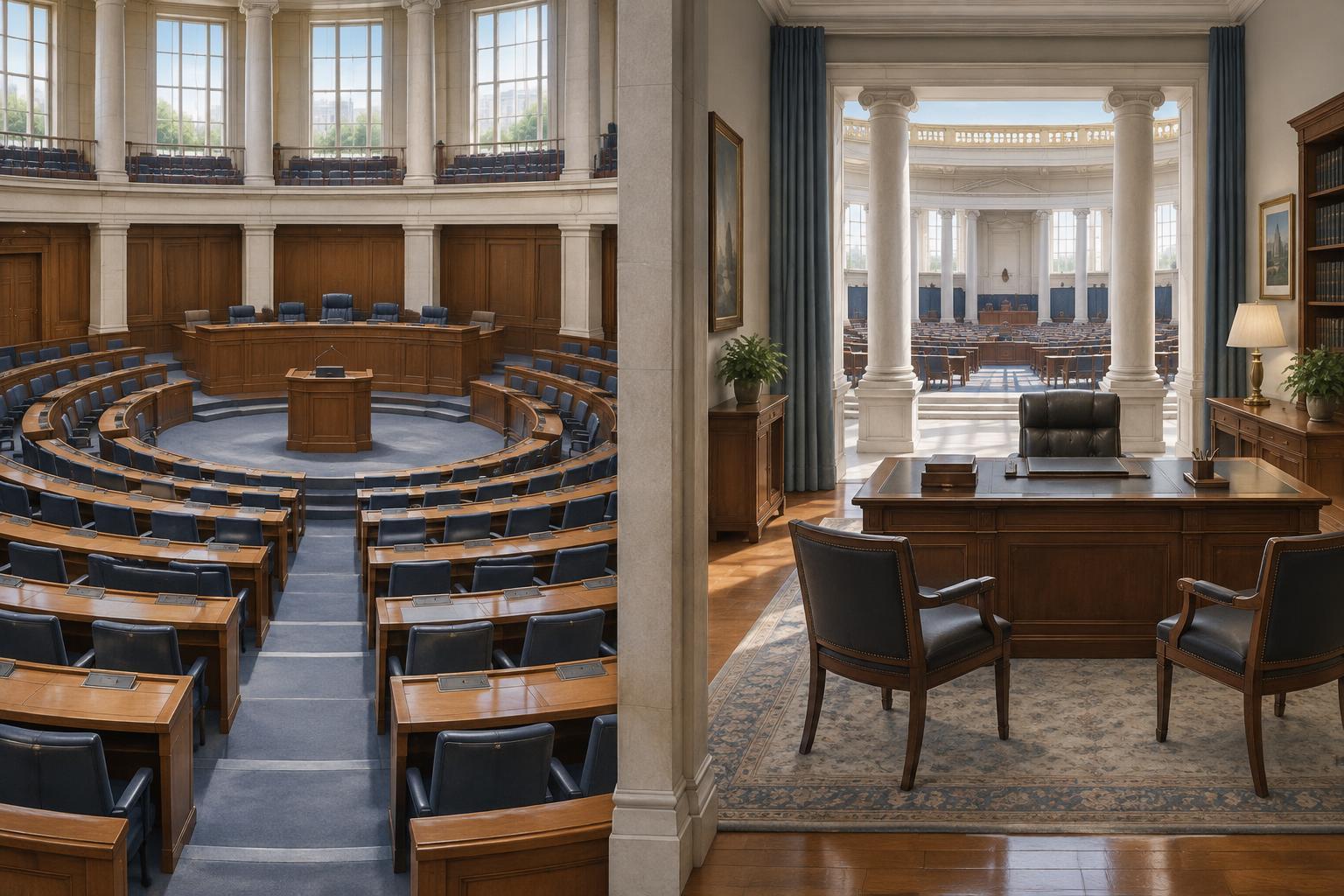
Two titles, two questions
The head of state and the head of government answer different questions about political authority. Who formally represents the state as a continuing institution? That is the head of state. Who leads the government that develops policy and manages much of the executive’s day-to-day work? That is the head of government. One person can answer both questions, but the roles are not identical.
The distinction is useful because a state lasts beyond any particular administration. Elections can replace a cabinet or prime minister without creating a new state. A separately designated head of state may perform duties associated with that continuity, such as receiving diplomats or taking part in formal ceremonies. A head of government is more directly associated with an administration’s programme, its ministers and its ability to keep governing. These descriptions are starting points, not rules that fit every constitution.
What each role may involve
A head of state may sign laws, appoint officials, open a legislative session or formally appoint a government. Such acts can be powerful, largely ceremonial or somewhere in between. Their meaning depends on whether the officeholder has discretion, must follow another official’s advice, or needs someone else to approve the act. A constitution might name the head of state as commander-in-chief, for example, while placing decisions about military policy with elected ministers.
A head of government typically coordinates ministers, sets priorities for the administration and represents its policies in the legislature and in public debate. In a parliamentary system, this person is usually a prime minister who must retain the confidence of the legislature, or of a particular chamber. If that support is lost, the government may have to resign or seek an election under the applicable rules. Formal authority and practical influence can still differ: party relationships, coalition agreements and political conventions shape what a leader can accomplish.
How political systems arrange the offices
In many parliamentary systems, the roles are separate. The head of state may be a monarch or a president, while a prime minister leads the government. The head of state need not be elected by the public; selection rules vary. Even when the office is generally nonpartisan, it may have duties during a government transition, such as appointing a prime minister who appears able to command legislative support.
In a presidential system, the president is commonly both head of state and head of government. That combines national representation with leadership of the executive, though it does not mean the president controls every part of the state. A legislature, courts and other institutions may exercise independent authority. Some systems also have both a president and a prime minister with substantial political roles. In these arrangements, the division of executive power can depend on constitutional rules and on which political groups control the presidency and legislature.
Why the distinction can be hard to see
Public appearances do not always reveal where decisions are made. A head of state may deliver a speech written by the government or sign a measure that has already passed through the required political process. Conversely, a president who represents the state at a ceremony may also direct government policy. The same visible act can therefore mean different things in different systems.
Terms can also obscure the picture. A person called “president” might be the chief political executive or a largely ceremonial head of state. A prime minister might dominate a stable legislative majority or need to negotiate every major decision with coalition partners. Nor does “ceremonial” necessarily mean unimportant: an office with limited routine discretion may become significant if an election produces no clear government or if constitutional procedures are contested.
A practical way to identify who does what
When comparing countries, start with four questions. Who formally represents the state? Who chooses and directs ministers? To whom must the government remain accountable to stay in office? Who has discretion over appointments, legislation or elections? The answers offer more insight than job titles alone.
Then distinguish the written rules from established practice. A constitution, ordinary laws and political conventions can each affect how an office works. It also helps to ask whether an action requires a minister’s advice, another official’s signature or legislative approval. Looking at both the legal procedure and the usual political process makes it easier to understand why a country may have two prominent national leaders without giving them the same job.