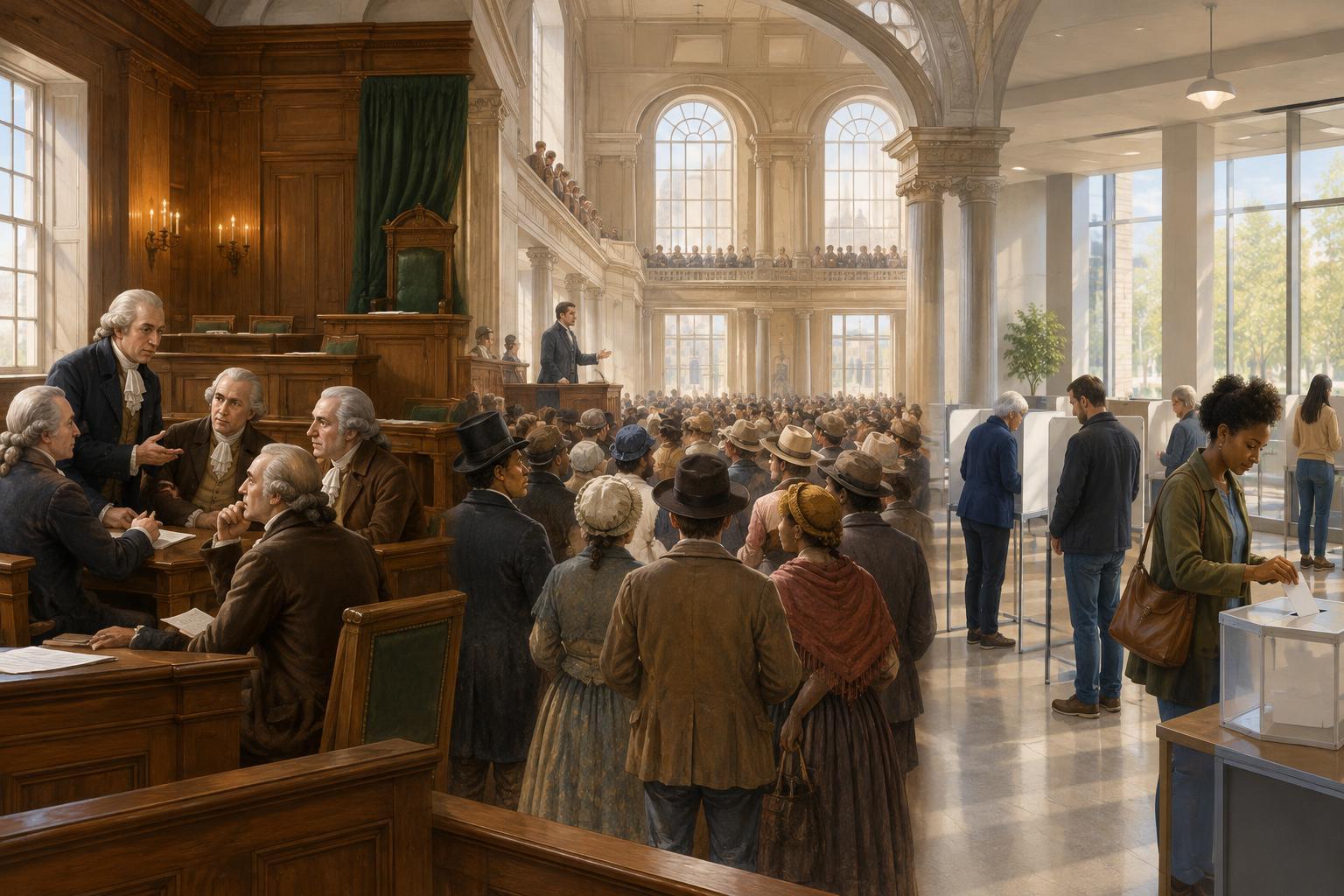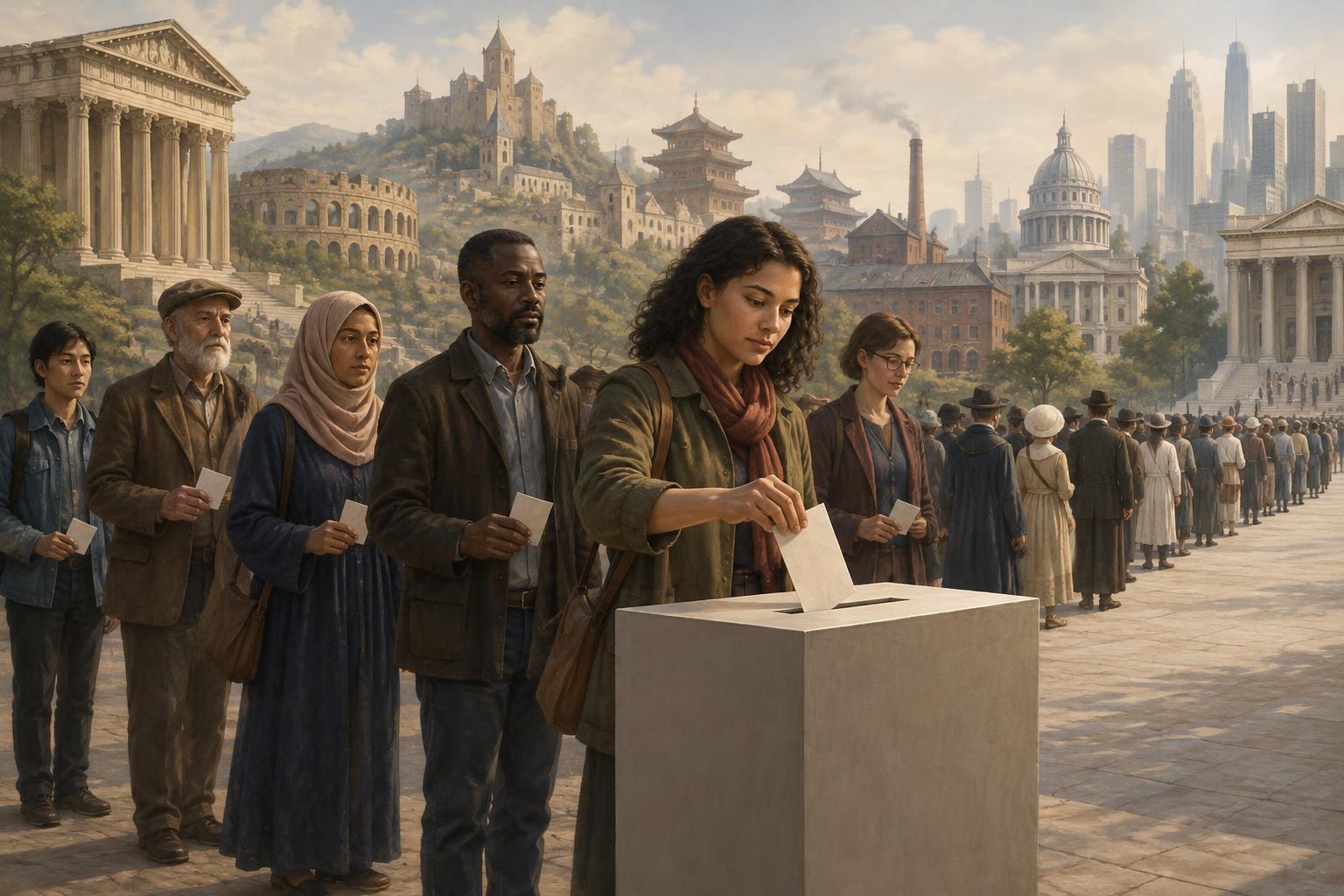
Before the modern constitutional charter
A constitution is the set of basic rules and practices that organizes political authority. It may address who can make laws, how leaders are chosen, what powers different institutions hold and what protections people can claim. Not every constitution is contained in one document. In some political systems, statutes, court decisions and longstanding practices together perform much of this work.
Written limits on rulers existed long before modern constitutions. Charters, codes and agreements could record privileges or constrain particular actions. But many were negotiated for specific groups rather than presented as a general framework for an entire political community. The modern written constitution brought several ambitions together: to describe the structure of government, state principles of legitimate authority and provide a reference point for future disputes.
Why put fundamental rules in writing?
Written charters became especially attractive when established authority was being challenged or replaced. A revolution, a break from an empire or a major change in a state’s governing arrangements could leave a basic question unanswered: who now has the right to govern, and on what terms? A public document offered a way to announce a new order and distinguish its rules from those of the previous one.
Writing could also help groups that distrusted one another reach an agreement. A charter might divide responsibilities between a central government and regional governments, set procedures for choosing officials or describe limits on state power. Its text gave participants something specific to approve, contest or amend. Yet writing did not remove disagreement. Terms such as liberty, representation and emergency power still required interpretation, and the ability to enforce a constitution depended on institutions and political conditions beyond the page.
Revolution and the example of early charters
In the late eighteenth century, constitution-making became closely associated with claims that political authority should rest on the people rather than solely on a monarch or inherited institutions. The United States Constitution established a federal government through a written framework. Revolutionary France also produced written constitutional texts, though political upheaval made its arrangements less stable. These cases were influential, but they did not establish one universal design.
Constitution-makers drew from earlier political arguments and practices, then made choices suited to their own conflicts. Some emphasized the separation of powers; others concentrated on defining a legislature, a monarchy or the place of regional governments. Early charters could declare rights while excluding many people from political participation. Understanding them therefore requires attention to both their stated principles and the boundaries they drew around the political community.
How constitutional models traveled
During the nineteenth and twentieth centuries, written constitutions spread through several overlapping processes. Independence movements needed rules for new states. Reformers sought to limit rulers or reorganize existing institutions. Federal unions needed agreements about shared and local authority. People drafting charters could examine documents from elsewhere and adapt familiar features, including elected assemblies, rights provisions and amendment procedures.
The exchange was not always voluntary or equal. Colonial powers sometimes imposed constitutional arrangements, while newly independent states inherited institutions built under colonial rule. International advisers and influential neighbors could also shape choices. A constitution borrowed from another setting might serve a different purpose in its new home: a provision that helped settle one country’s conflict might create fresh questions in another. The spread of written charters was therefore neither a simple copying exercise nor a steady march toward a single form of government.
What a written constitution can—and cannot—do
A written constitution can make basic commitments visible. It can identify how public decisions should be made and offer a standard against which officials’ actions are judged. Amendment rules may allow change while asking decision-makers to consider it more deliberately than an ordinary law. These features help explain why written charters remain appealing when societies establish or reconsider their governing arrangements.
No document can guarantee that its rules will be respected. Courts, legislatures, administrators, civic organizations and the public all affect how constitutional promises work in practice. Nor does the absence of one consolidated charter mean a political system has no constitutional rules. The history of constitutions is best understood as the history of efforts to organize and justify power—not as a contest in which the longest or most detailed document necessarily wins.