An appeal before it was a campaign
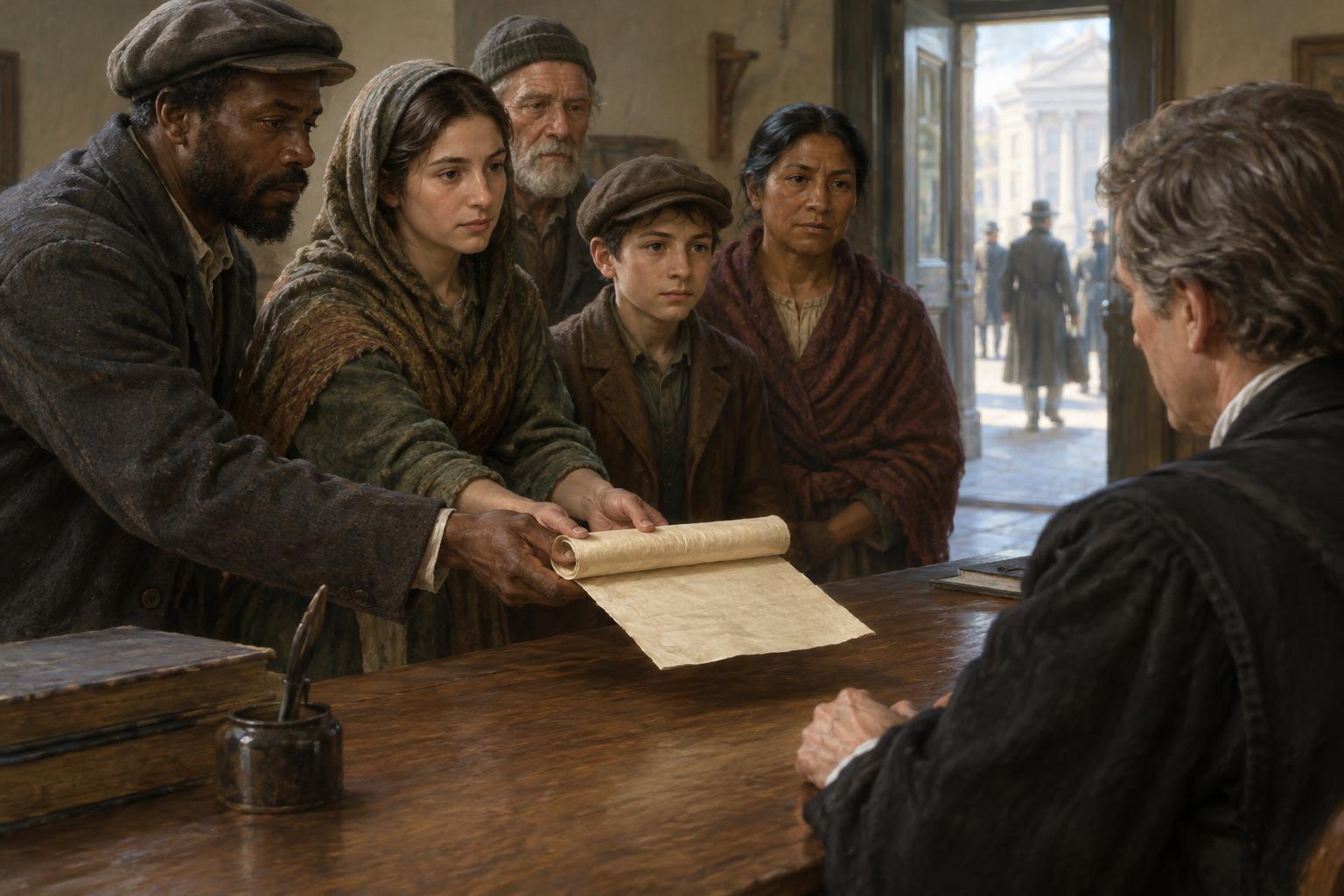
A petition is a request addressed to someone with the power to act. Across different political settings, people have used petitions to seek relief from a grievance, ask for a change in a rule, or bring a local problem to an authority’s attention. The recipient might have been a monarch, a council, a legislature, or an administrative office. These arrangements differed greatly, so there is no single starting point or simple path of development for the petition.
In many historical settings, a petition was less a demand for a public vote than an appeal for an authority to exercise judgment. It might describe a particular hardship and ask for an exception or remedy. That makes petitions useful evidence for political historians: they can reveal what people believed an authority was responsible for, which arguments they thought might be persuasive, and what channels existed for raising a complaint. They do not, by themselves, show that the request was granted.
From individual requests to collective claims
Petitions can speak for one person, a household, a community, or a wider group. When people sign or endorse a shared request, the document does more than state a problem: it presents that problem as a matter of common concern. Organizers may gather names, coordinate wording, and deliver the request to a body they believe can respond. These activities can help turn a private grievance into a public issue.
The meaning of a signature depends on the setting. It may indicate strong agreement, general sympathy, support for a hearing, or simply a willingness to have a concern recorded. A long list of names can demonstrate organizing capacity, but it cannot necessarily tell us how many people in a wider population shared the view. Some people may have been unable to sign, reluctant to do so, or excluded from the process altogether.
Petitions could also provide a form of participation where access to other political channels was limited. That did not make the process equal. Rules about who could submit a request, practical barriers to gathering support, and an authority’s willingness to listen all shaped whose concerns became visible. When studying a petition campaign, it is worth asking not only who signed, but also who drafted the text, carried it, and had the resources to pursue a reply.
What happens after a petition is delivered?
Submitting a petition and securing a result are separate events. An institution might acknowledge a request, refer it to a committee, debate it, reject it, or take no visible action. Procedures for handling petitions vary, and they may change over time within the same institution. A formal opportunity to petition therefore tells us something about access to government, but not enough to establish how responsive that government was.
Influence can also be difficult to trace. A petition may help place an issue on an agenda without directly producing a policy change. Conversely, a later decision may have several causes, including debate within government and pressure from other groups. Historians should be cautious about claiming that a petition caused an outcome simply because it came first. Records of discussion, repeated requests, and responses can help clarify the connection, though they may still leave uncertainty.
How to read a historical petition
Start with the document’s basic questions: Who addressed it to whom? What action did the petitioners request? How did they describe the problem and justify their request? A petition is written to persuade, so its language may emphasize shared values, loyalty, urgency, or fairness. Those choices are evidence of a political strategy, not a complete account of everyone’s experience.
Next, consider what survives around the document. A draft may differ from the version submitted; a copy in an official archive may preserve the request but not the conversations that produced it. If possible, compare the petition with an institutional response and with other accounts of the issue. This helps distinguish what the petitioners wanted, what officials recorded, and what eventually happened.
The history of petitions is not simply a story of progress from quiet requests to mass campaigns. Individual appeals and collective petitions can coexist, and their effects depend on institutions and circumstances. Their lasting importance lies in the questions they raise: who can address power, how people make a claim on public attention, and what it means for an authority to listen.