What a photograph shows—and what it cannot
A photograph records a view of a moment, not a complete account of an event. It may show who stood near a podium, what appeared on a sign, or how a crowd looked from one position. It cannot, by itself, explain what happened just before or after the shutter was pressed. Nor can it reliably establish what a person intended, whether a crowd represented a wider public, or why someone appeared to react in a particular way.
This distinction matters in civic life because photographs often travel faster than the explanations around them. An image of an official speaking to a nearly empty room might suggest poor attendance. It could also have been taken before the audience arrived, after people left, or from an angle that excludes them. The image may be authentic in every pixel while the conclusion drawn from it remains unsupported. A useful first question is: What can I directly observe, and what am I inferring?
How framing and cropping shape the story
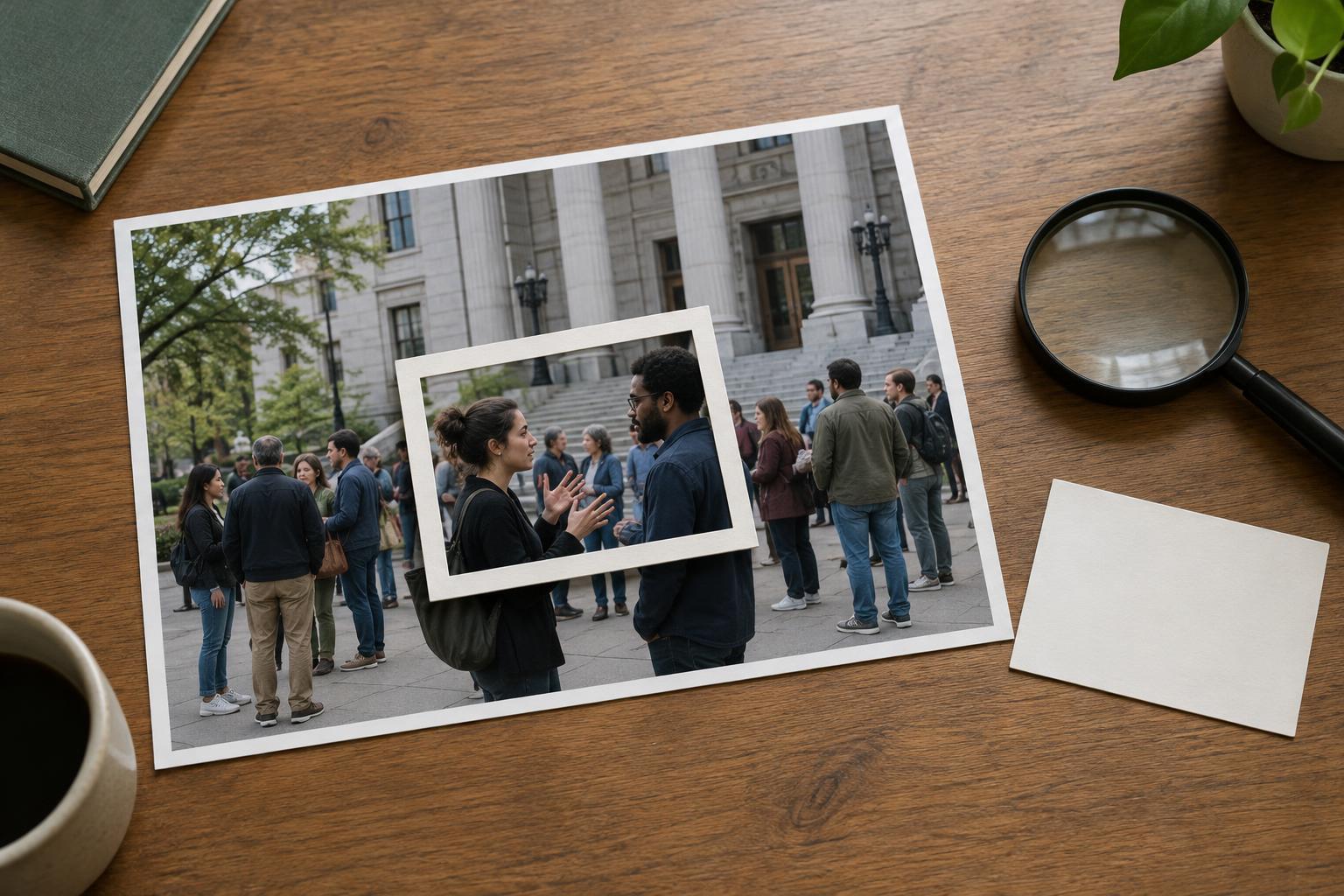
Every photograph has boundaries. The photographer chooses where to stand, when to shoot, and what to place inside the frame. Someone posting the image may then crop it further. These choices are not necessarily deceptive: an editor might crop to make a subject visible on a small screen. But each choice affects what a viewer can judge.
Imagine a photograph showing one person holding a provocative sign at a public gathering. A tight crop might make the sign look central to the gathering; a wider view might show that it was one sign among many, or that it stood apart from the main group. The wider view would not automatically settle the meaning of the event, but it would provide a better basis for interpreting the close-up. Look for surrounding space, other participants, banners, and landmarks that might have been left outside the frame. If multiple images of the same scene are available, compare them without assuming that the widest image tells the whole story.
Captions supply claims the image cannot prove
A caption can identify people, place an image in time, and explain what was happening. It can also steer interpretation. Compare “Official waits before a public meeting” with “Official addresses an empty hall.” Both might accompany the same photograph, yet the second makes a stronger claim about the occasion. Words such as “celebrates,” “confronts,” or “ignores” can assign motives or actions that a still image alone may not establish.
When reading a caption, separate its checkable details from its interpretation. Who is identified? Where and when was the photograph reportedly taken? Does the caption describe something visible, or does it assert a cause, motive, or outcome? An original caption from the photographer or publisher may offer helpful context, but it should still be read alongside the image rather than treated as proof of every implied conclusion. A later social-media caption may describe an entirely different event.
Check for missing time and context
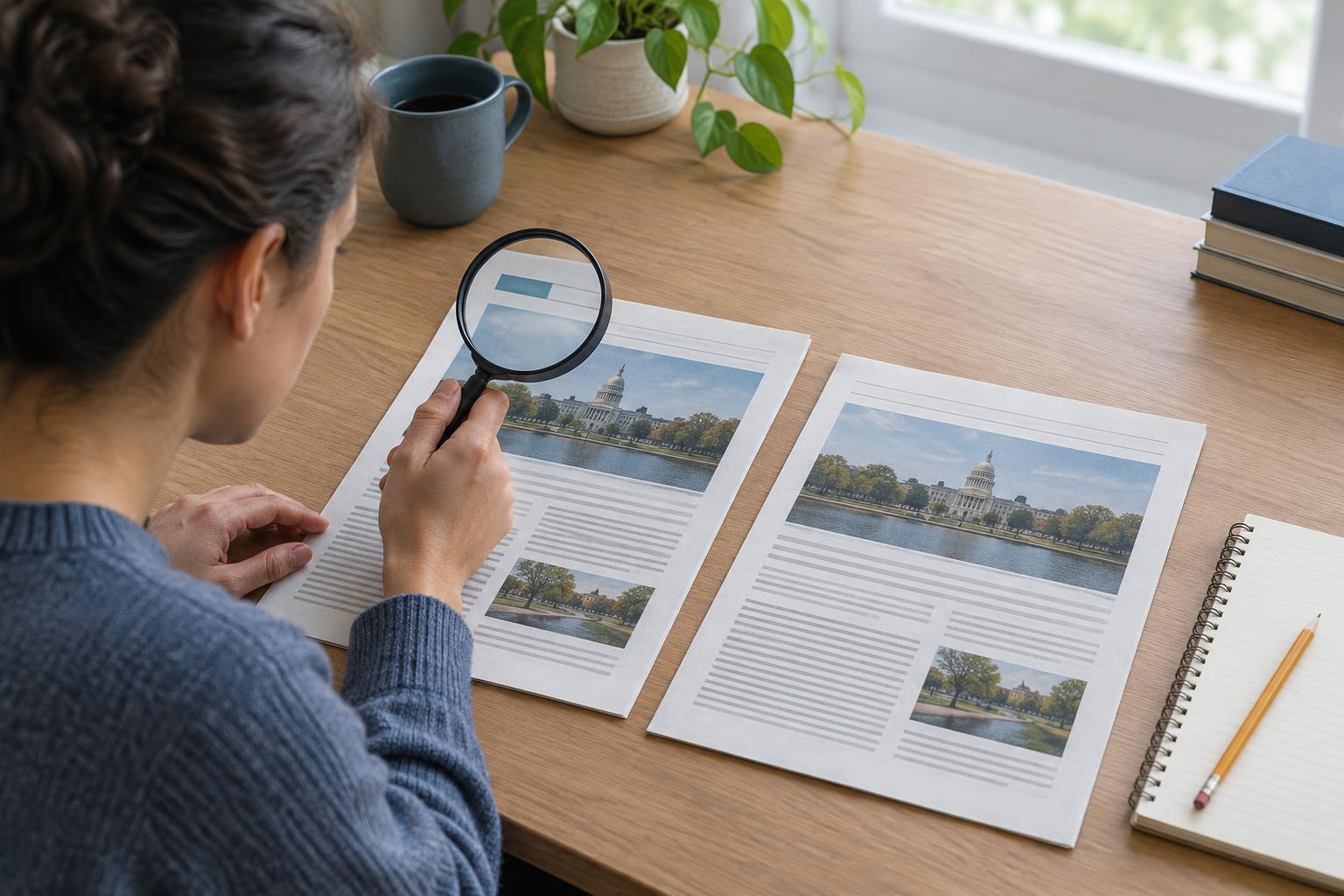
Old photographs can be recirculated as if they depict a recent dispute. An image can also come from the right event but the wrong stage of it. A photograph taken during setup, for example, says little about attendance during the main proceedings. When the timing matters to a claim, look for the earliest available publication, an event name, a location, and a date. Distinctive signs, clothing, buildings, or weather may help compare versions, though such clues are not always conclusive.
A reverse-image search can help locate earlier appearances of a photograph or find an uncropped version. Related reporting, an official event record, or images taken from other positions may also clarify the setting. These checks are most useful when they address a specific question, such as whether the image predates the event named in a post. If the evidence remains incomplete, saying “the context is unclear” is more accurate than replacing one confident story with another.
A practical routine before sharing
Start by describing the image in neutral terms: “Several people stand outside a building,” rather than “Voters reject a policy.” Then read the caption as a separate claim. Ask who posted the image, whether they identify its origin, and whether a crop or screenshot has removed a caption or other context. If the post relies on a precise assertion about place, timing, identity, or motive, check that assertion before repeating it.
Finally, consider whether the photograph supports the point for which it is being used. An expressive face does not reveal a person’s thoughts, and a single scene rarely establishes the scale or character of an entire movement. You do not need to solve every uncertainty before discussing a photograph. You can share what is visible, note what is unverified, and avoid presenting an inference as an established fact. That habit preserves the value of photographs as evidence without asking them to tell more than they can.