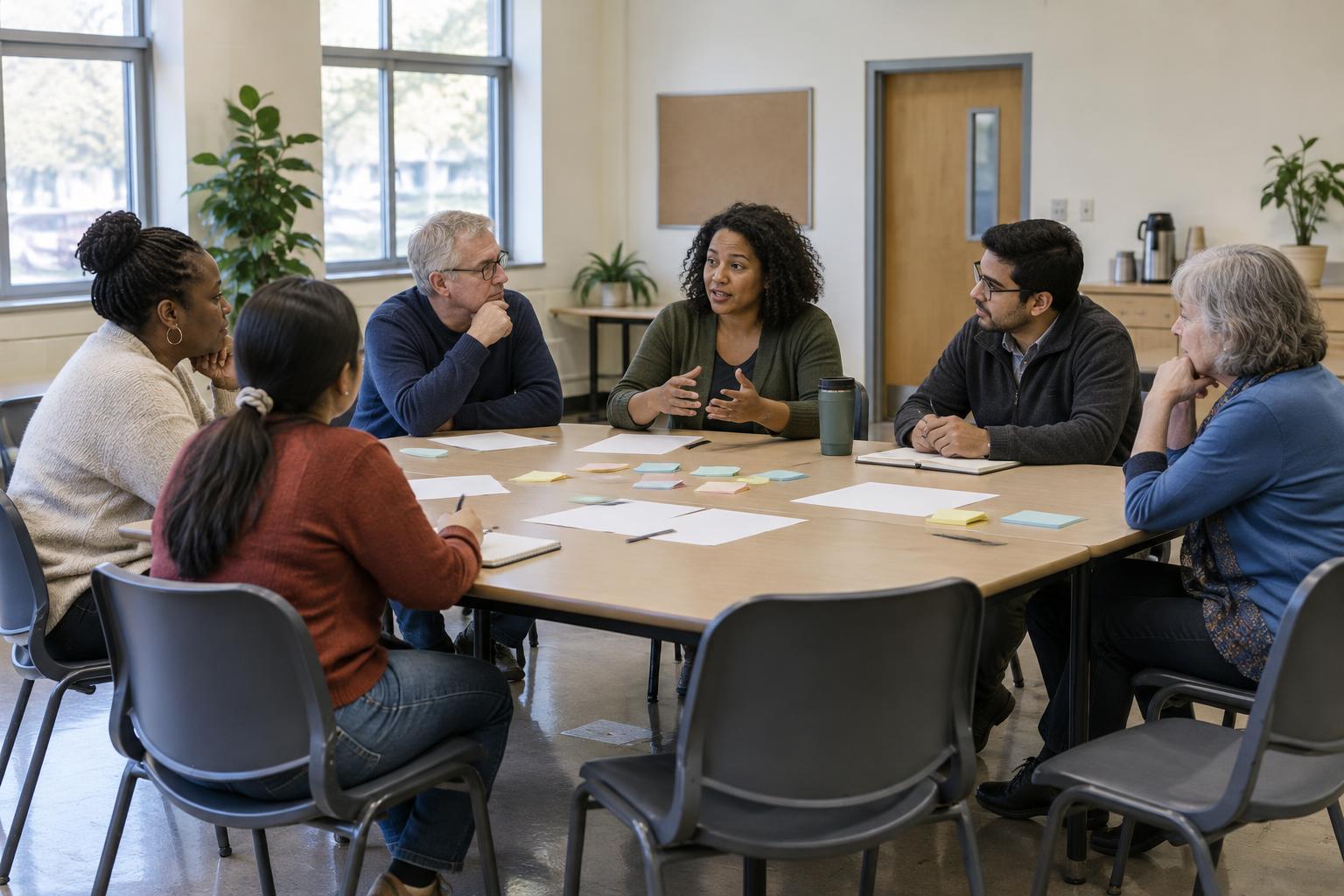
What public consultation is for
Public consultation is a process in which a public body seeks views before making or revising a decision. It might ask residents to comment on a proposal, invite organizations to submit evidence, hold meetings or conduct interviews with people likely to be affected. The question may be broad, such as which goals a policy should pursue, or narrow, such as how a proposed rule would work in practice.
Consultation is one input to policymaking, not a decision-making method on its own. Officials may also consider legal requirements, budgets, technical evidence and the responsibilities of elected representatives. A useful consultation makes clear what decision remains open, who will make it and how responses may be used. Without that clarity, participants can reasonably mistake an invitation to comment for a promise that their preferred outcome will be adopted.
What consultation can add
People who use a service or live with a policy may notice difficulties that are hard to see in a planning document. For example, a proposed change to library hours might look workable on paper but create problems for people who rely on a particular evening opening. Frontline workers, community groups and businesses may also identify implementation costs, confusing language or unintended effects. These contributions can help officials test their assumptions.
Consultation can expose differences in priorities rather than erase them. Participants may agree on a goal but disagree about its costs, timing or trade-offs. Hearing those views early gives decision-makers a chance to revise options, explain constraints or identify questions that need more evidence. It can also make a final decision easier to understand when the public body explains which concerns affected the proposal and why other requests could not be met.
Why responses are not a public vote
Most consultations are not designed to measure what an entire population thinks. People usually choose whether to participate, and those with more time, information or organizational support may be more likely to respond. A large number of similar submissions can show that an issue matters to many participants, but it does not necessarily show how views are distributed across everyone affected.
This does not make consultation responses worthless. It means they should be interpreted for what they can provide: reasons, experiences, concerns and sometimes specialist knowledge. If a public body wants to estimate the prevalence of an opinion, it may need a separate method designed for that purpose, such as a carefully sampled survey. Consultation and representative research answer different questions, even when both inform the same policy.
Design choices that shape who can participate
The way a consultation is run affects the views it receives. A technical document may be useful to specialists but difficult for others to assess. An online form may be convenient for some people while excluding others who have limited access or need a different format. Meeting times, language, accessibility, response deadlines and the specificity of the questions can all affect participation.
A public body can improve the process by stating the policy options in plain language, explaining known constraints and offering more than one suitable way to respond. It may also need targeted outreach to hear from people who are particularly affected but unlikely to encounter a general invitation. These steps cannot guarantee equal participation. They can, however, reduce avoidable barriers and help officials see whose perspectives may still be missing.
How to judge whether a consultation was useful
A good process is not defined by whether every participant gets the outcome they wanted. More useful questions are whether the public body asked about matters it could still change, allowed enough information for meaningful responses and treated different kinds of input fairly. A question framed only to support an option already chosen offers little opportunity to test that option.
Afterward, an accessible account of the responses and the decision helps close the loop. It can describe the main issues raised, explain any changes and give reasons where suggestions were not followed, while protecting information that should remain private. Participants can then see the difference between being heard and having final authority. Consultation works best when it improves the evidence and reasoning behind a decision, without pretending to replace the institutions responsible for making it.