Why the distinction matters
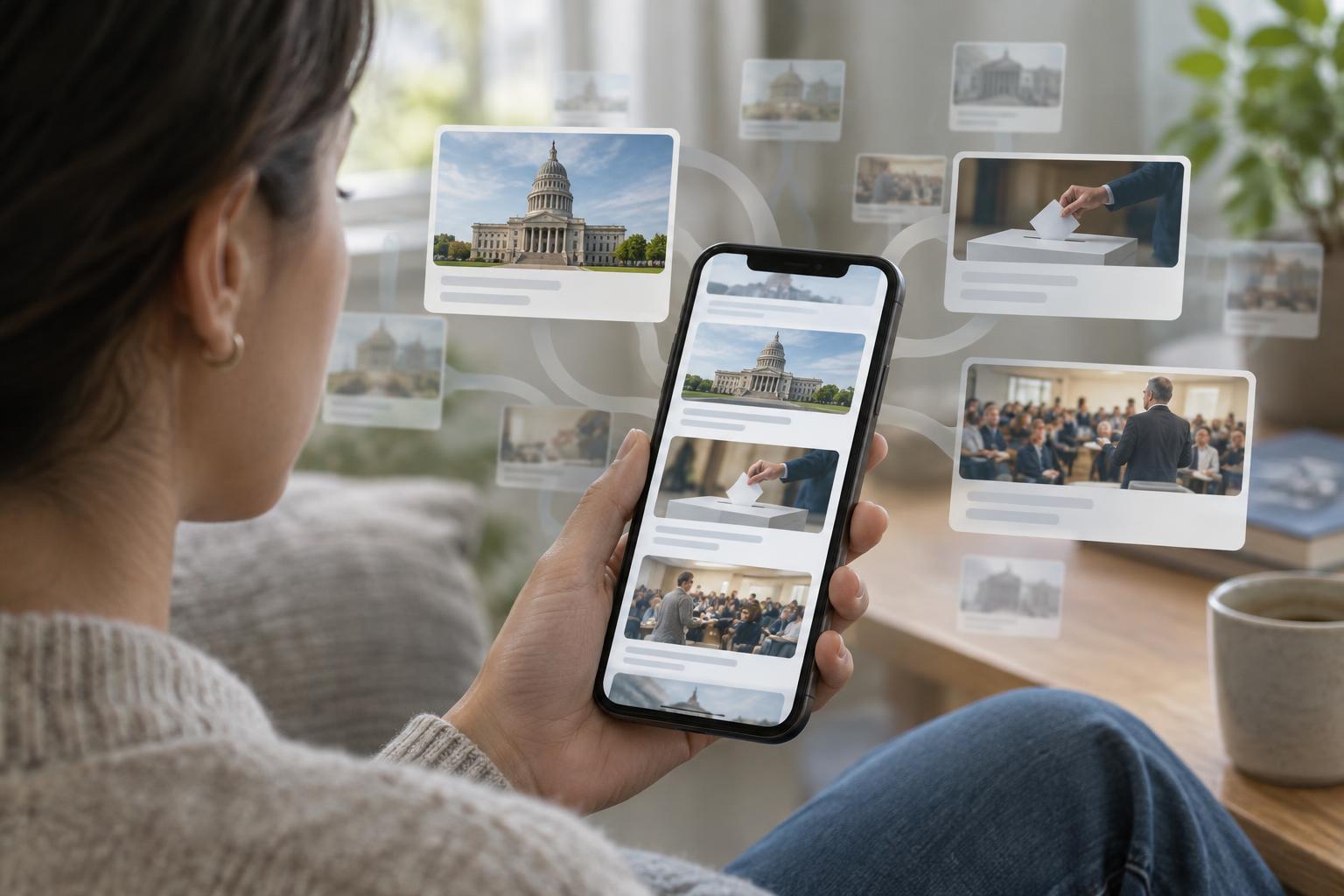
Civic media covers issues such as elections, public services, legislation, and community decisions. It may include reporting, opinion, public notices, advocacy, and advertising. These forms can appear side by side, sometimes in the same visual style. Knowing which kind of material you are reading helps you judge its purpose and decide what else you need to check.
Sponsored content is material whose production or placement is paid for or otherwise supported by an outside party. Native advertising is advertising designed to resemble the surrounding publication’s articles, videos, or social posts. Neither label tells you whether every statement is true or false. It does tell you to ask who wanted the material published and how much control that party had over its message.
Look for labels, then look beyond them
Start at the top and bottom of the page, as well as near the author’s name. Possible disclosures include “advertisement,” “sponsored,” “paid partnership,” “presented by,” or “produced with support from.” A social post may display a platform partnership label rather than a note in the caption. Labels vary in wording and prominence, so scan the whole item before treating it as independent reporting.
A label may identify a funder without explaining the funder’s role. “Supported by” could describe an arrangement different from “written by” or “approved by.” If the distinction matters, look for a publication’s explanation of its editorial practices. Also check for publication marks such as “opinion” or “press release.” An opinion piece may be independently selected by an editor, while a press release may be written by the organization it describes; neither is necessarily a paid advertisement.
Check who is speaking and what the piece asks you to do
Notice whose voice carries the story. Does an identifiable reporter examine competing explanations, or does the piece mainly repeat one organization’s preferred framing? Are quoted people connected to the sponsor? Does the item link primarily to a campaign page, a sign-up form, or an organization selling a service? A call to action does not by itself prove that a piece is sponsored, but it is a reason to identify the speaker and their goal.
Pay attention to presentation, too. A paid feature may use the same headline style, photography, and page layout as nearby news articles. The design can make it easy to miss a small disclosure. Conversely, polished design is not evidence of sponsorship on its own. Use visual clues to prompt a closer look at labeling and authorship, not as a substitute for them.
Evaluate the claims separately from the sponsorship
Once you know who produced the material, examine what it says. Distinguish checkable claims from interpretations or proposals. If a piece states that a policy will produce a particular result, ask what assumptions connect the policy to that result and whether other outcomes are possible. For a number or quotation, look for enough context to understand what was measured or said. A link to a source is useful only if that source supports the specific claim.
Compare important claims with material produced for different purposes, such as an original public document, a clearly attributed explanation, or reporting that identifies its evidence. Agreement across items is more informative when they do not all repeat the same press release. Be careful with missing context: a description of a proposal may leave out its limitations, costs, or alternatives without making an explicit false statement.
Use a quick reading routine
Before sharing a civic item, ask four questions: What is this material labeled? Who paid for or produced it? What is it asking me to believe or do? What evidence would help me check its central claim? If the answers are unclear, describe it cautiously rather than passing it along as independent news.
This routine is especially useful when a story arrives through a social feed, newsletter, or search result, where the original page’s disclosures may be less visible. Open the full item when possible and check its source. Sponsored content can provide a useful account of a group’s priorities, but its perspective should remain visible. The aim is not to dismiss a message because it has a sponsor; it is to read it with an accurate understanding of who is speaking.