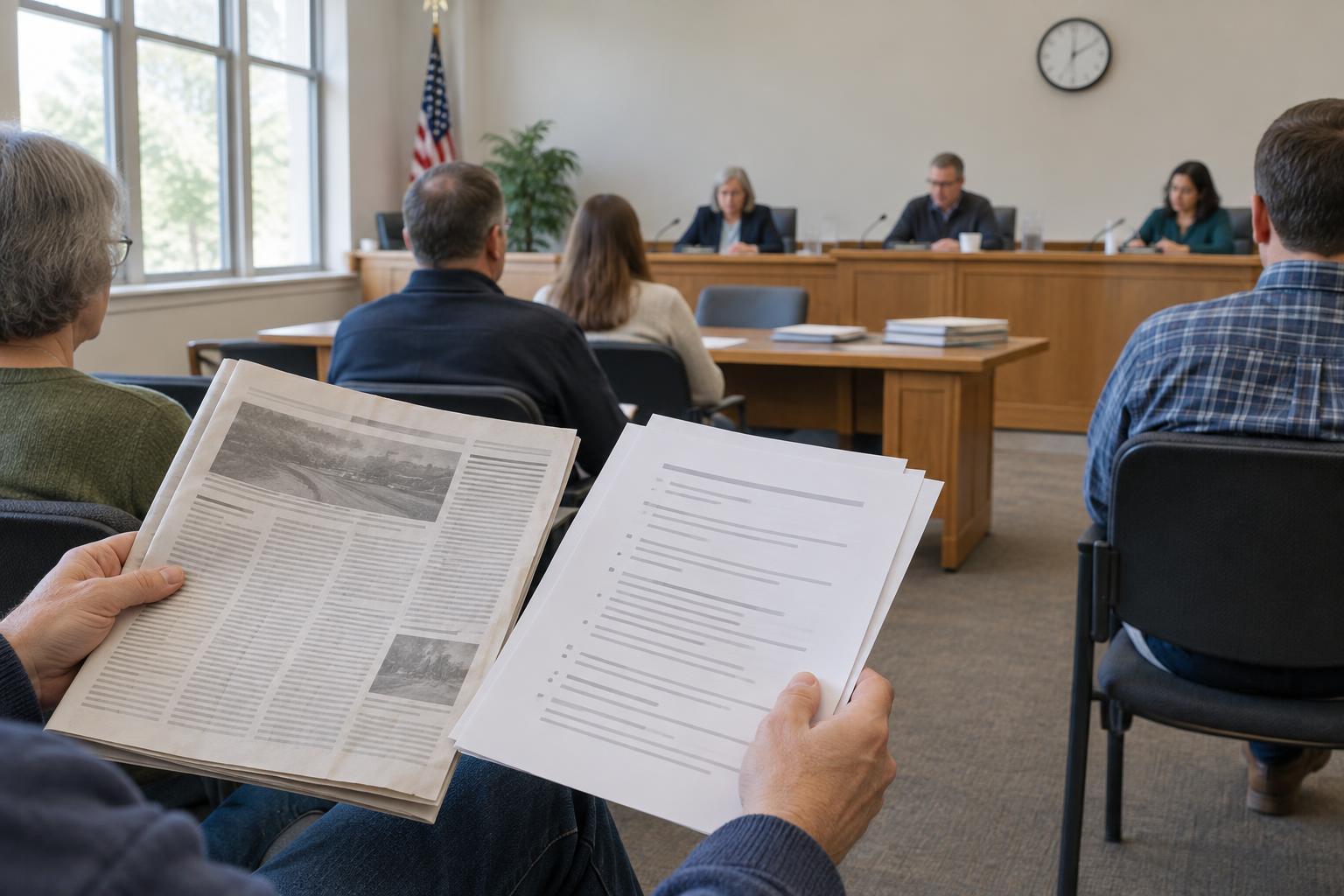
Start with the body and the question before it
A public meeting can bring together officials, staff, residents, and reporters, but not every gathering serves the same purpose. A council may be considering an ordinance, a board may be reviewing an application, or a committee may be gathering information for a later recommendation. Before interpreting a headline, identify which body met, what authority it had, and what specific question appeared on its agenda. A discussion about a proposal is not necessarily a decision to adopt it.
Pay attention to the verbs in a report. “Discussed,” “recommended,” “approved,” and “enacted” describe different steps. Even “approved” may need explanation: the body might have approved a draft, an amendment, a recommendation, or a final measure. Procedures vary by institution and location, so avoid assuming that a familiar term always has the same effect. If the report does not say what happens next, treat the status of the proposal as an open question rather than filling in the gap.
Read the agenda as a map, not a script
An agenda can show the order of business and the items expected to come before a body. Supporting materials may include staff explanations, proposed text, prior records, or written submissions. These documents help reveal whether a contentious exchange concerned the main proposal, one provision, or a procedural motion. They do not guarantee that the meeting unfolded exactly as planned: an item may be postponed, revised, or discussed alongside related matters.
When available, compare the report with the agenda and the version of any proposal being discussed. Note dates and version labels so that you do not mistake an earlier draft for the text under consideration at the meeting. An agenda item titled broadly may cover several narrower choices. Conversely, a dramatic statement made during an item may not describe the choice the body was actually asked to make.
Separate participation, deliberation, and action
Coverage often highlights public comment because it makes the stakes visible. A speaker’s experience or concern can explain why an issue matters, but it does not by itself show what the body decided or establish how widely that view is shared. Check whether the quoted person was a member of the public, a staff member presenting information, or an official taking part in deliberation. Each has a different role in the meeting.
The same distinction applies to remarks by officials. A question, objection, or expression of support may signal a position without changing policy. To find the action, look for a motion and its outcome. Was the matter amended, referred elsewhere, delayed, rejected, or adopted? If a vote is reported, ask what was being voted on—not just who voted which way. In some settings, an item can advance through a procedural vote while substantive questions remain unsettled.
Use records carefully—and notice their limits
Meeting minutes, recordings, written decisions, and posted materials can clarify a short news account. They may help you check the wording of a motion, the sequence of amendments, or whether a decision was recorded. Yet these sources serve different purposes. Minutes often summarize official actions rather than reproduce every exchange. A recording offers more detail but can still be hard to interpret without the documents participants were discussing.
Records may also appear at different times. An initial report might describe what observers saw before approved minutes or a final written document are available. That does not make the report unreliable; it means its account may be narrower than the eventual record. When accounts seem to conflict, first check whether they refer to different stages, different versions of a proposal, or different meanings of a word such as “passed.”
Build a fuller picture without demanding perfect coverage
A useful reading routine is to answer five questions: Who had authority at this meeting? What item was under consideration? Which version of the proposal was discussed? What action, if any, was taken? What steps remain? If the answers are missing, look for another account or an accessible meeting record. Keep the questions separate; evidence that an issue drew strong reactions is not evidence that a policy changed.
News stories have limited space and often lead with the development most relevant to their readers. Procedural context does not replace that reporting; it helps you understand its scope. You can take public testimony seriously, recognize the significance of disagreement, and still be precise about the institutional outcome. The goal is not to turn every meeting into a paperwork exercise. It is to know whether you are reading about a concern raised, an option debated, or a decision made.