Start with the claim, not the clip
A short video can feel like direct evidence of what happened. But even an authentic recording can mislead if it is described as being from a different city, presented as recent when it is older, or cropped so that identifying details are missing. Before checking it, write down the specific claim you want to test: where was it recorded, when was it recorded, and what event is it said to show? These are related questions, but they may require different evidence.
Save the link to the post and note its caption, account name and posting time. A posting time tells you when that copy appeared online, not when the camera recorded the scene. Treat captions, on-screen text and voiceovers as claims to examine rather than proof. If the video has been reposted, look for an earlier version with more context or a longer sequence. An earlier upload can help establish that the footage existed by a certain point, though it may still have been recorded before then.
Look for the earliest available context
Search distinctive phrases from the caption or any visible signs, along with neutral descriptions of what appears in the footage. Try more than one wording: a post may call an event a “rally,” while another calls it a “march.” A still frame can also be useful for finding other appearances of the same footage. Compare results carefully, since similar-looking scenes are not necessarily the same recording.
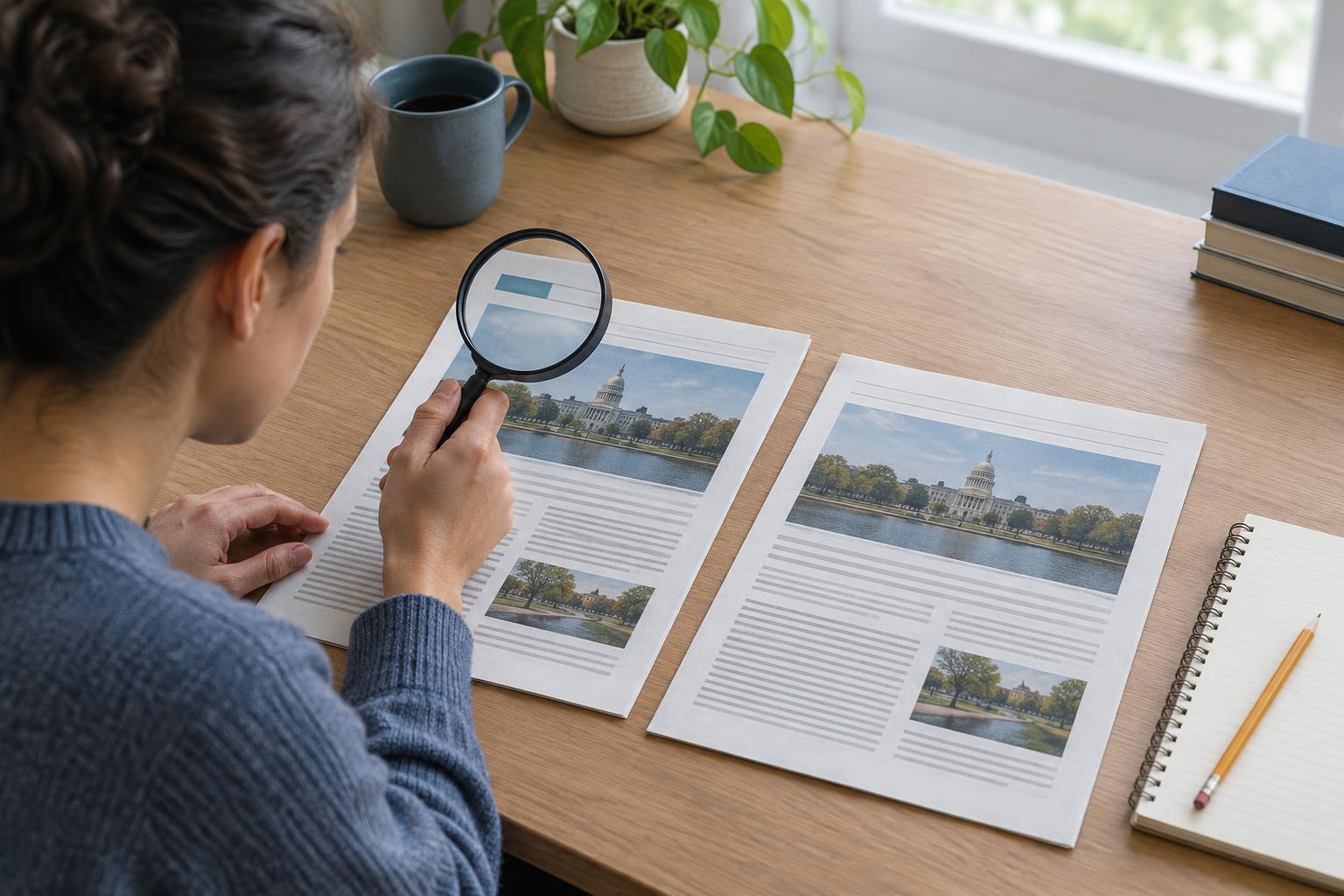
When you find another copy, check what it adds. Does it show an uncropped storefront, a wider view of a street, or several seconds before and after the shared clip? Does its description identify a place or event, and can that identification be checked independently? Several accounts repeating the same caption do not provide several independent confirmations. If every copy seems to trace back to one unattributed post, the origin remains uncertain.
Check the location using multiple clues
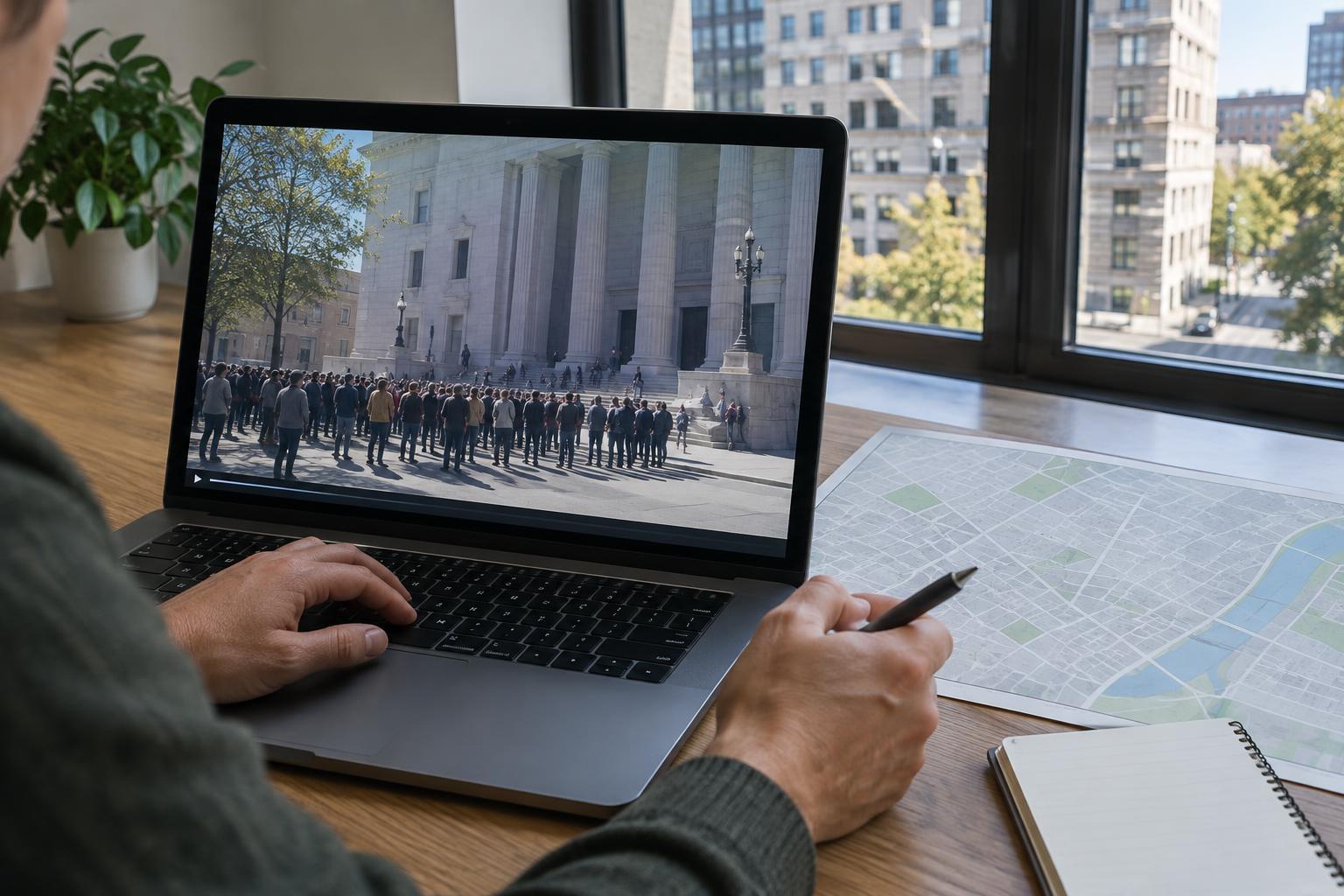
Buildings, transit signs, street layouts, public art, terrain and languages on signs can all help narrow a location. Start with the most distinctive features rather than broad impressions. A building facade or street intersection may be more useful than a flag or a police uniform, which could appear in many places. Compare the arrangement of features, not just one matching object: which side of the road is a sign on, what is behind it, and how do nearby streets meet?
Be alert to misleading cues. A banner may name a place other than the one where it was filmed, and a vehicle may have traveled from elsewhere. Camera angles, renovations and temporary structures can also make a genuine location hard to recognize. If you cannot compare the scene with reliable visual references, describe the clue as suggestive rather than conclusive. Avoid publishing a precise location for a private person or sensitive site when a broader description is enough to evaluate the civic claim.
Estimate the recording time cautiously
The strongest time clue may be an identifiable event shown in a fuller version of the video. Other clues include dated notices, construction conditions, seasonal features or the sequence of events visible across several recordings. Each has limits: a poster can remain up after its printed date, and weather alone rarely identifies a particular day. Shadows may help distinguish broad times of day, but their interpretation depends on location, camera orientation and conditions.
A video file may contain creation-time or location metadata, especially if you have an original file rather than a social-media copy. That information can be missing, changed by editing or affected by an incorrect device clock. It is one clue, not an automatic verdict. Likewise, an upload timestamp sets a latest possible recording time only if the uploaded video is the same footage under review. Be careful about time zones when comparing posts or event schedules.
State what the evidence supports
Bring the clues together before reaching a conclusion. For example, a longer recording might match a particular intersection, while an earlier upload shows that the clip was online before the date claimed in a new post. That supports a location and challenges the new date, but it does not necessarily reveal the exact recording time. Distinguish “recorded here,” “consistent with here” and “not enough evidence to tell.”
If the available evidence conflicts, explain the conflict rather than choosing the most vivid clue. Keep a brief record of the versions you checked and the features you compared so that someone else can follow your reasoning. It is reasonable to leave a video unverified. In civic discussions, a careful account of what is known, what is only plausible and what remains unknown is more useful than a confident guess.