Start with a question, not a list of dates
A timeline is most useful when it answers a focused question. “How did a policy change?” gives you a clearer task than “What happened in this period?” The question helps determine which events belong on the timeline and which are merely nearby in time. Define the place, institutions, and period you will cover before collecting entries.
Next, decide what counts as an event. A vote, court ruling, election, protest, report, negotiation, or change in administrative practice could all matter, but they are not interchangeable. Record what happened in plain language before explaining why it happened. For example, “A committee issued a proposal” describes an event; “The proposal forced lawmakers to act” makes a causal claim that needs separate support.
Track more than one strand of change
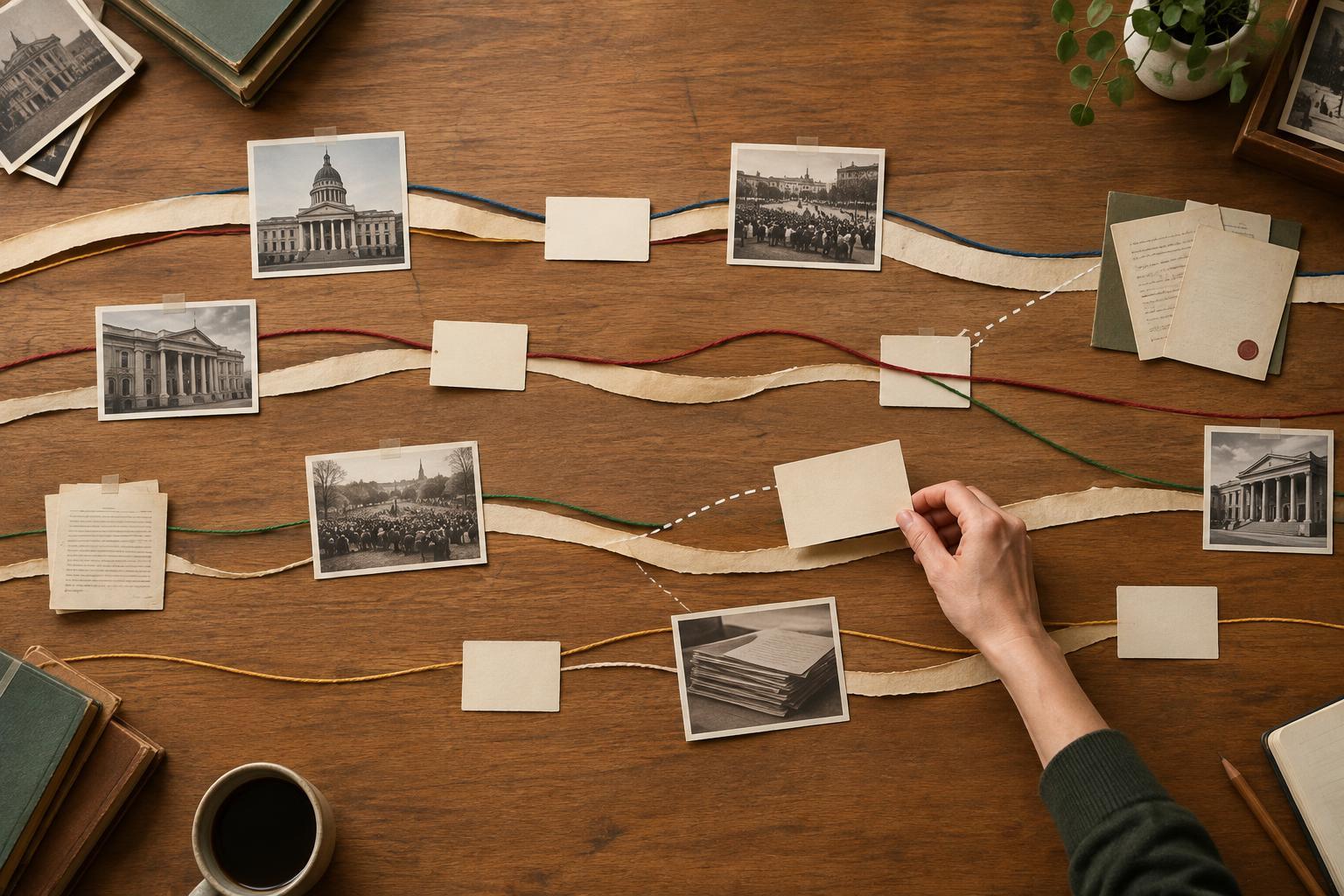
Political developments often unfold across several connected tracks. Alongside formal decisions, consider recording public debate, organized advocacy, economic conditions, institutional rules, and the implementation of earlier decisions. A policy may be approved on one date but debated for years beforehand and put into practice gradually afterward. Showing these tracks together makes it easier to notice both connections and gaps.
Use consistent labels so readers can distinguish types of entries at a glance. You might label an item “institutional decision,” “public response,” or “implementation.” If a timeline becomes crowded, make separate parallel strands rather than removing events simply because they do not fit a neat sequence. The aim is not to include everything; it is to preserve the developments most relevant to your question.
Keep chronology separate from causation
An earlier event is not automatically the cause of a later one. To suggest a causal connection, ask what mechanism could link them. Did the first event change the rules, supply resources, alter incentives, bring new participants into the process, or shape how people understood an issue? Then ask what evidence would support that proposed link. A documented response by decision-makers, for instance, would be more informative than the dates alone.
It also helps to distinguish a trigger from longer-term conditions. A single announcement might prompt a decision while institutional procedures, earlier compromises, and sustained pressure help explain why that decision was possible. Several factors can matter at once, and their importance may be disputed. In your timeline notes, write “possible influence” or “followed by” when a stronger claim is not justified. Reserve “led to” for a connection you can explain and support.
Show what the evidence can and cannot establish
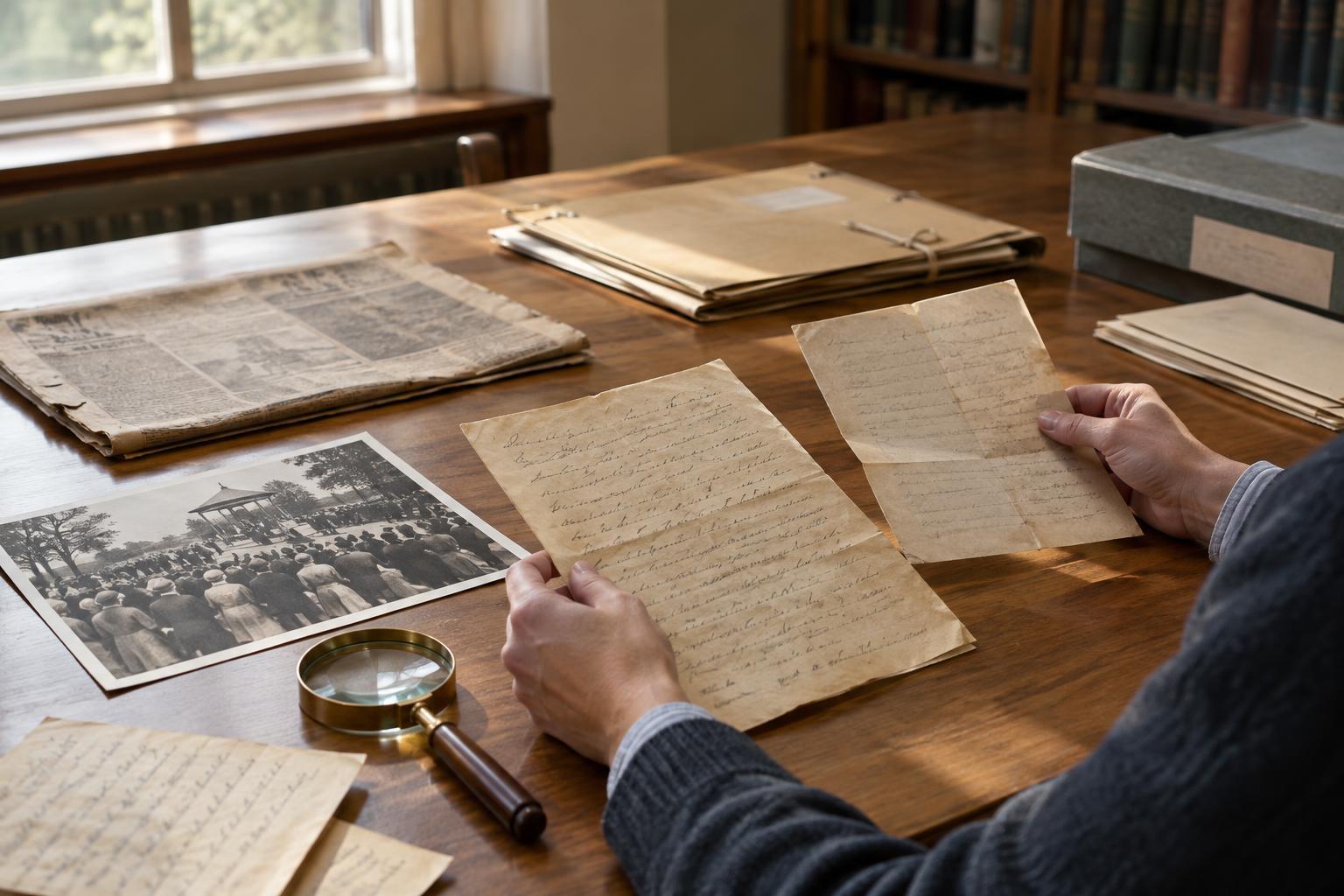
For each entry, note where its date and description came from. Different kinds of records answer different questions: an official record may establish when a decision was made, while a speech may show how a participant described its purpose. Neither, by itself, necessarily explains everyone’s motives or the decision’s full effects. When accounts disagree, identify the disagreement instead of quietly choosing the version that produces the smoothest story.
Be especially careful with broad entries such as “public opinion shifted” or “leaders changed course.” These summarize processes rather than single moments. If you include them, indicate the observations behind the summary and avoid assigning an exact turning point without good reason. Approximate dates, date ranges, and notes such as “the sequence is uncertain” can make a timeline more accurate, not less useful.
Revise the story the timeline seems to tell
Once the entries are arranged, read them as a skeptical reader would. Does the layout imply that every event moved toward an inevitable outcome? Have you included failed proposals, reversals, delays, or decisions that took events in another direction? These may be essential to understanding the choices people faced at the time. Avoid describing earlier actors as though they knew how the story would end.
Finally, write a short summary that distinguishes your strongest findings from open questions. State the sequence you can establish, the connections you have reason to consider, and the alternatives your evidence does not rule out. A well-built political timeline is not a diagram with one arrow pointing to one result. It is a way to make change over time visible while leaving room for competing explanations.