Counsel before representation
A legislature is a body with a recognized role in making laws, but many of its historical predecessors began with a different purpose. Rulers called together nobles, religious leaders, officials or other influential people to seek advice, settle disputes and gather support. These councils could help a ruler govern a large territory without carrying out every decision alone. Their members generally attended because of their position or relationship to the ruler, not because the wider population had elected them.
Councils also gave rulers a way to negotiate over resources. Raising money or organizing military service often depended on cooperation from people who controlled land, local administration or trade. A ruler might therefore ask a gathering to approve a levy or hear grievances before requesting support. Such meetings did not necessarily limit royal power in a lasting way. Their importance lay partly in establishing a habit of collective discussion around public decisions.
When consultation became representation
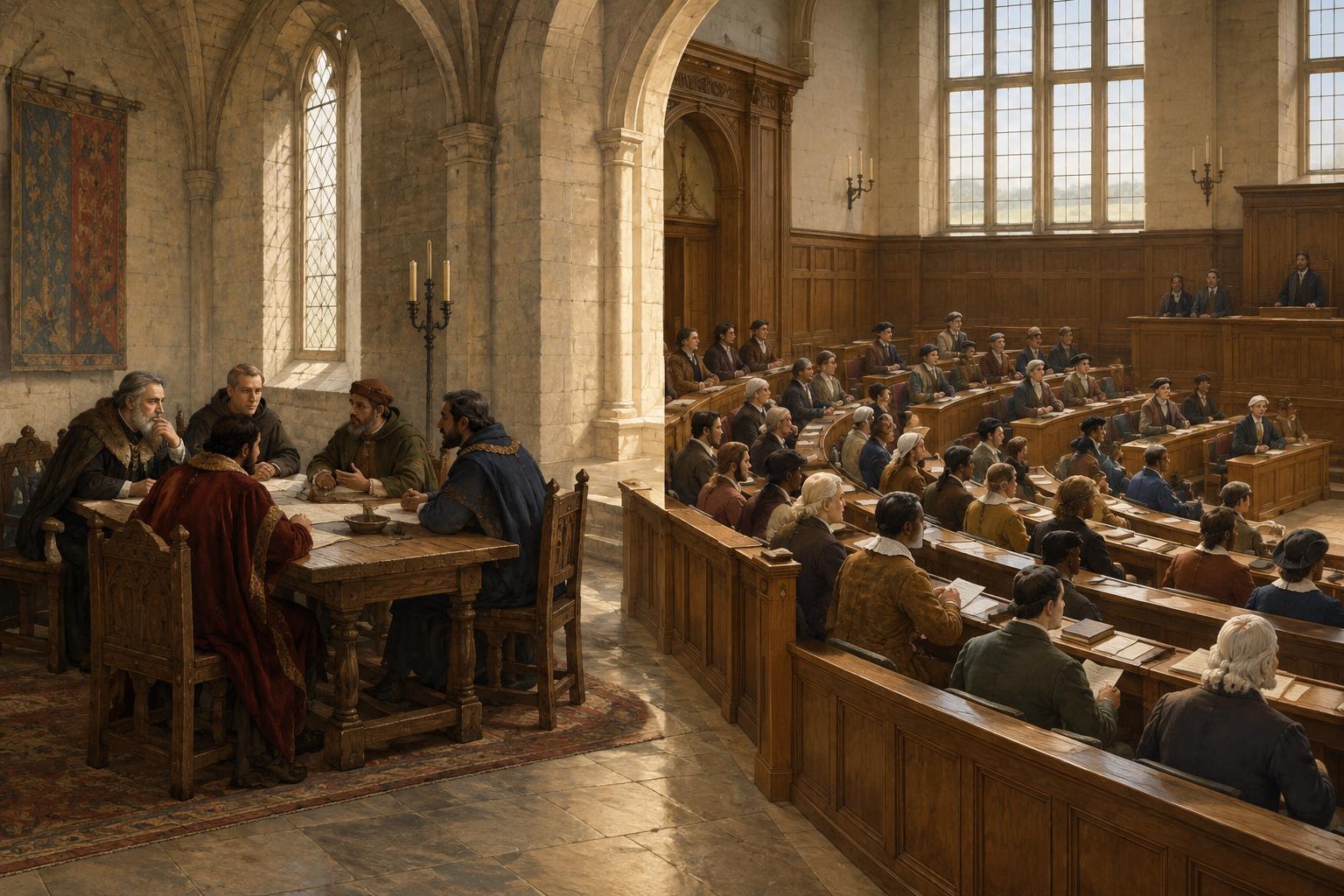
Over time, some rulers invited delegates from towns or other communities alongside established elites. These delegates might be chosen through local institutions and charged with communicating a community’s interests. In medieval England, for example, gatherings that included nobles and clergy came to include representatives associated with counties and boroughs. Elsewhere in Europe, estates or similar bodies brought together groups defined by social rank, locality or occupation. Their membership and powers varied considerably.
These bodies were representative in a limited sense: some participants spoke for people who were not present. They were not broadly democratic. Many residents had no formal voice, and delegates could be selected by a narrow group. Representation also did not automatically mean control over government. An assembly might present petitions or consent to certain taxes while the ruler retained wide authority over laws and administration.
The struggle to make assembly powers durable
For an assembly to become a dependable part of government, it needed more than occasional invitations. Rules about when it met, what business it could consider and whether its consent was required made a difference. So did its ability to keep records, develop procedures and act collectively rather than as a set of separate advisers. Conflicts over taxation, religion, war and succession sometimes sharpened these questions.
The balance between ruler and assembly changed unevenly. Some representative bodies gained greater influence over taxation or lawmaking; others were suspended, weakened or bypassed. Even where an assembly established important powers, those powers might be contested for generations. The history of legislatures is therefore not a steady march from royal command to popular rule. It includes compromise, reversal and institutional survival under changing political conditions.
Constitutions and wider electorates
Later constitutional movements and the creation of new states offered opportunities to define legislatures more explicitly. Written constitutions could specify how members were chosen, how long they served and how a proposed law became binding. Some systems divided legislative work between two chambers, often giving each a different basis of membership. Others used a single chamber. These choices reflected debates about whose interests should be heard and how government power should be checked.
Elections became more central to the idea of a legislature, but the right to vote expanded at different times and at different rates. Property requirements, exclusions based on sex or race, and other restrictions meant that an elected assembly could still represent only part of society. Campaigns to change these rules altered the relationship between legislatures and the people they governed. Broader voting rights also changed what candidates had to discuss and how they sought public support.
Why the history still matters
Modern legislatures usually combine several inherited roles. They debate and pass laws, consider public spending, question executive officials and provide a forum for competing views. How much influence they have depends on a country’s constitutional rules, party system and political practice. Some assemblies can initiate major policy changes; others spend more time reviewing proposals from the executive. Elections alone do not tell the whole story of an institution’s powers.
The path from council to elected assembly is best understood as a set of recurring questions rather than a single model: Who gets a seat? Whom do members speak for? Which decisions require their consent? Can they hold other officials to account? Asking these questions helps distinguish a meeting that advises a ruler from a legislature that can exercise authority on behalf of a wider public.