What periodization helps historians do
Political history contains more events than any single account can explain. Periodization—the practice of dividing the past into named stretches of time—gives readers a way to follow patterns. A historian might organize a study around the rise of a state, a period of reform, or the decline of an empire. These divisions help identify what changed and what remained familiar.
A period, however, is an interpretive tool, not a feature of the calendar. People living through a transition rarely know that a new era has begun. Even when an event has a precise date, its political causes may have developed over years, while its effects may have unfolded unevenly. The question is not only when something happened, but why that moment should mark a boundary.
How a boundary gets chosen
Historians often use visible changes as starting or ending points: a new constitution, a revolution, an election that brings a different coalition to power, or the end of a war. Such events can change who governs and which rules apply. They also leave records that make them relatively easy to identify. For a history of a legislature, a constitutional change might be a sensible boundary.
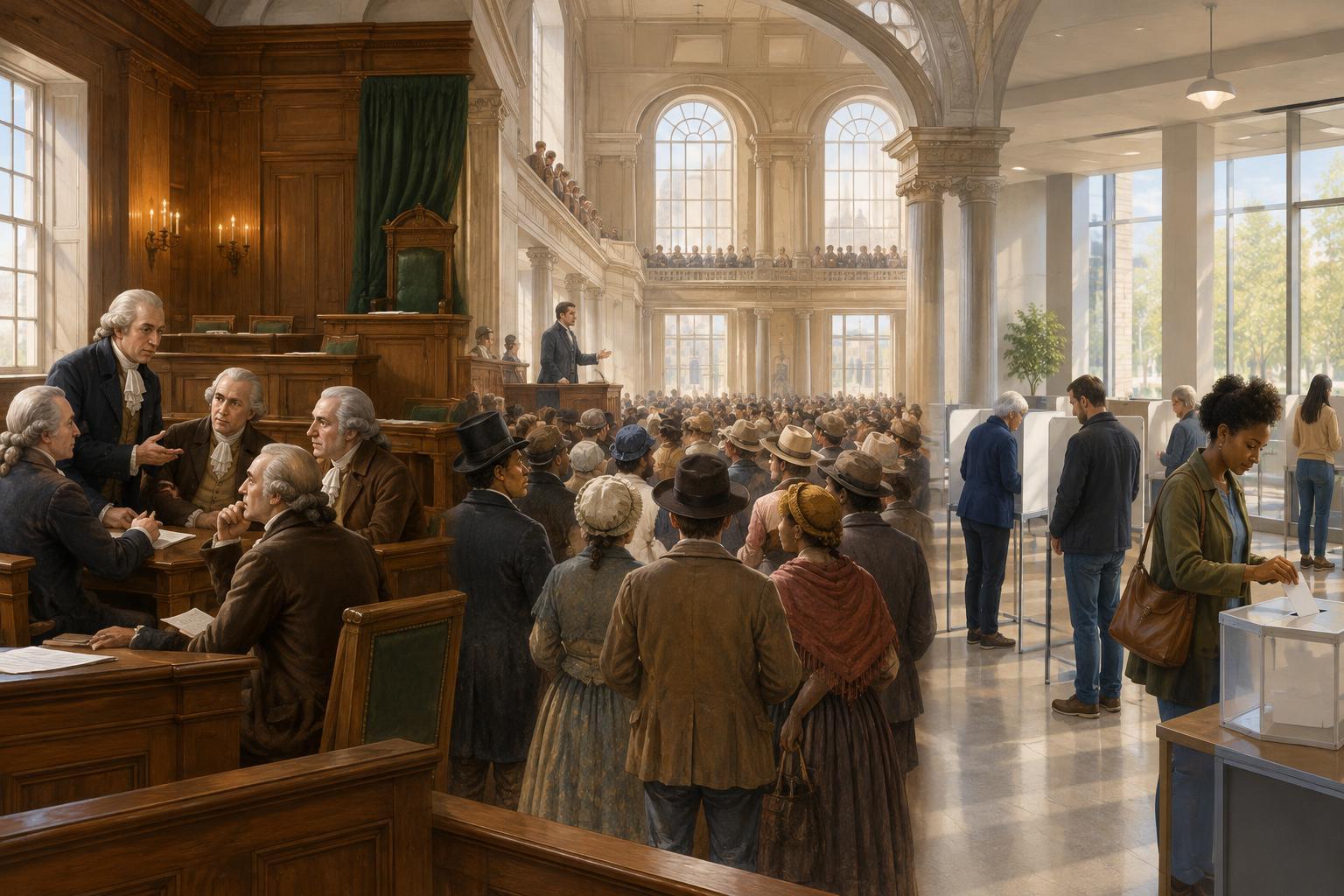
A different question may call for a different date. Someone studying political participation might focus on when voting rights expanded in practice, which need not match the date of a constitutional reform. Someone studying government capacity might examine the slower development of tax collection, administration, or local enforcement. In each case, the boundary follows the process being studied. It is useful to ask: a turning point for whom, and in what respect?
Historians may also choose broad periods to compare developments across places. This can make a complicated account easier to read, but it comes at a cost. A label that fits one country's institutions may describe another country's experience poorly, even when both appear on the same timeline.
Why sharp breaks are often misleading
Political change rarely reaches everyone at once. A central government can announce new laws before officials can apply them consistently. A regime can fall while courts, civil servants, local leaders, and established ways of exercising power remain in place. Conversely, public expectations and political alliances can shift substantially before any formal institution changes. An event may therefore be a sharp break in one story and a midpoint in another.
The scale of the story matters too. A national timeline may emphasize changes in the capital, while a local history may show a longer or less orderly transition. A history centered on rulers may divide time by dynasties or administrations; one centered on ordinary civic life may track access to schooling, representation, or public services. Neither approach automatically cancels the other. Each brings some changes into focus and leaves others in the background.
Why names for eras attract debate
Period labels do more than sort dates. Words such as “reform,” “decline,” or “restoration” suggest an interpretation of what happened. A government might describe a change as restoration because it claims to recover an earlier order, while people excluded from that order might see little reason to use the term. Even familiar labels can make a mixed period sound more uniform than it was.
Debate over names and boundaries can reveal whose perspective shaped a timeline. Did it begin with a conquest, or with the political changes that preceded it? Does an era end when independence is declared, or when new institutions begin to function? Historians may reasonably answer these questions differently because they are studying different communities, kinds of power, or sources of evidence. Disagreement does not necessarily mean that dates are arbitrary; it can clarify what a particular account is trying to explain.
How to read a political timeline critically
When you encounter a named period, look for its organizing question. Notice which event opens or closes it, which place the timeline covers, and whose political experience it emphasizes. Then look across the boundary: what changed quickly, what changed gradually, and what continued? A useful period label should help answer those questions rather than replace them.
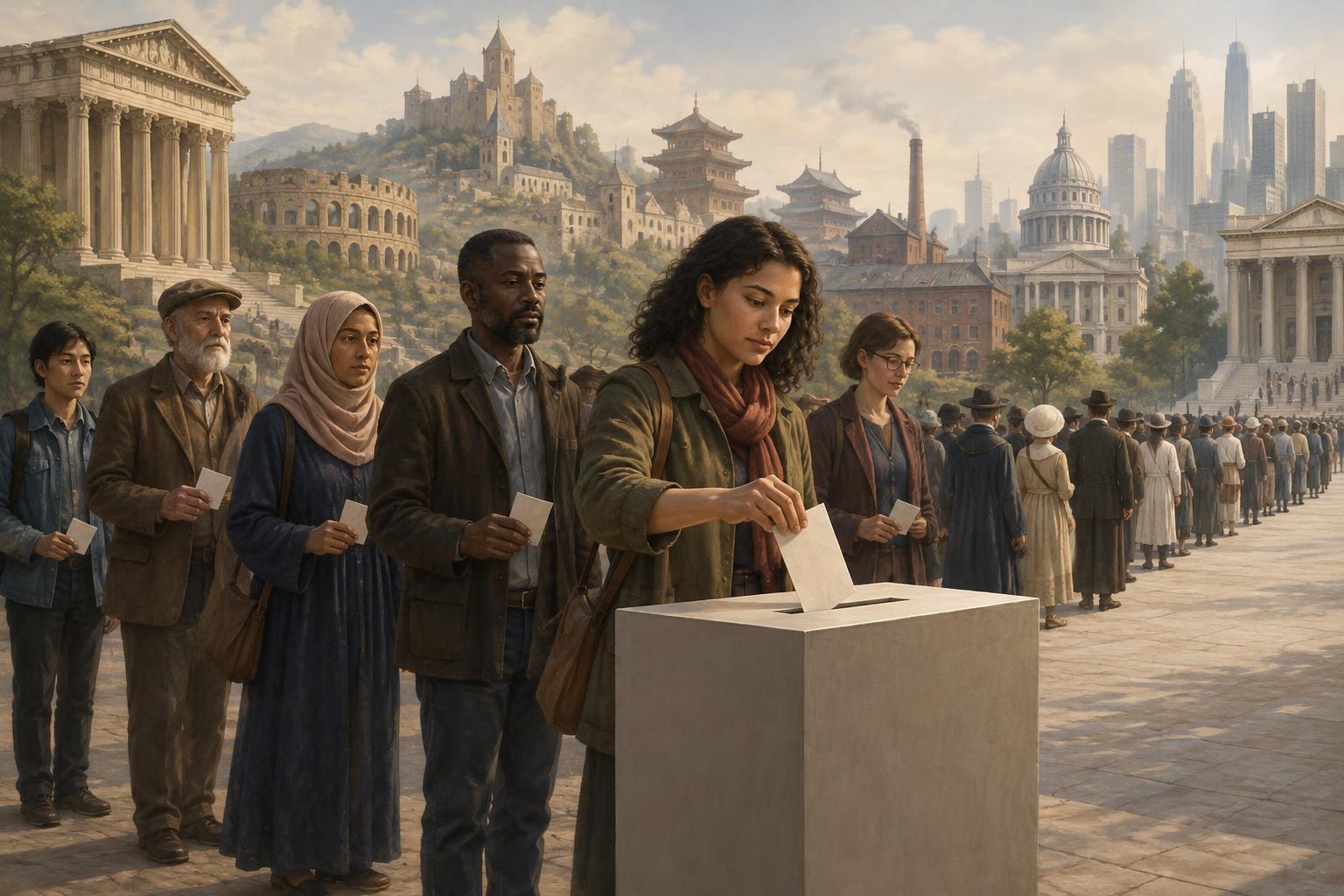
It can also help to imagine an alternative division. If an account begins with a change of ruler, what would happen if it began with a shift in public participation instead? The resulting story might emphasize different causes without making the first timeline useless. Periods are maps of the past: valuable for finding a route through complex material, but never identical to the terrain they describe.