What changes when government becomes representative?
Monarchy and representative government are not exact opposites. A monarchy describes a system with a hereditary head of state. Representative government describes a way of making public decisions through people selected to act on behalf of a wider population. A country can have both: a monarch may remain head of state while an elected legislature and ministers exercise most political authority.
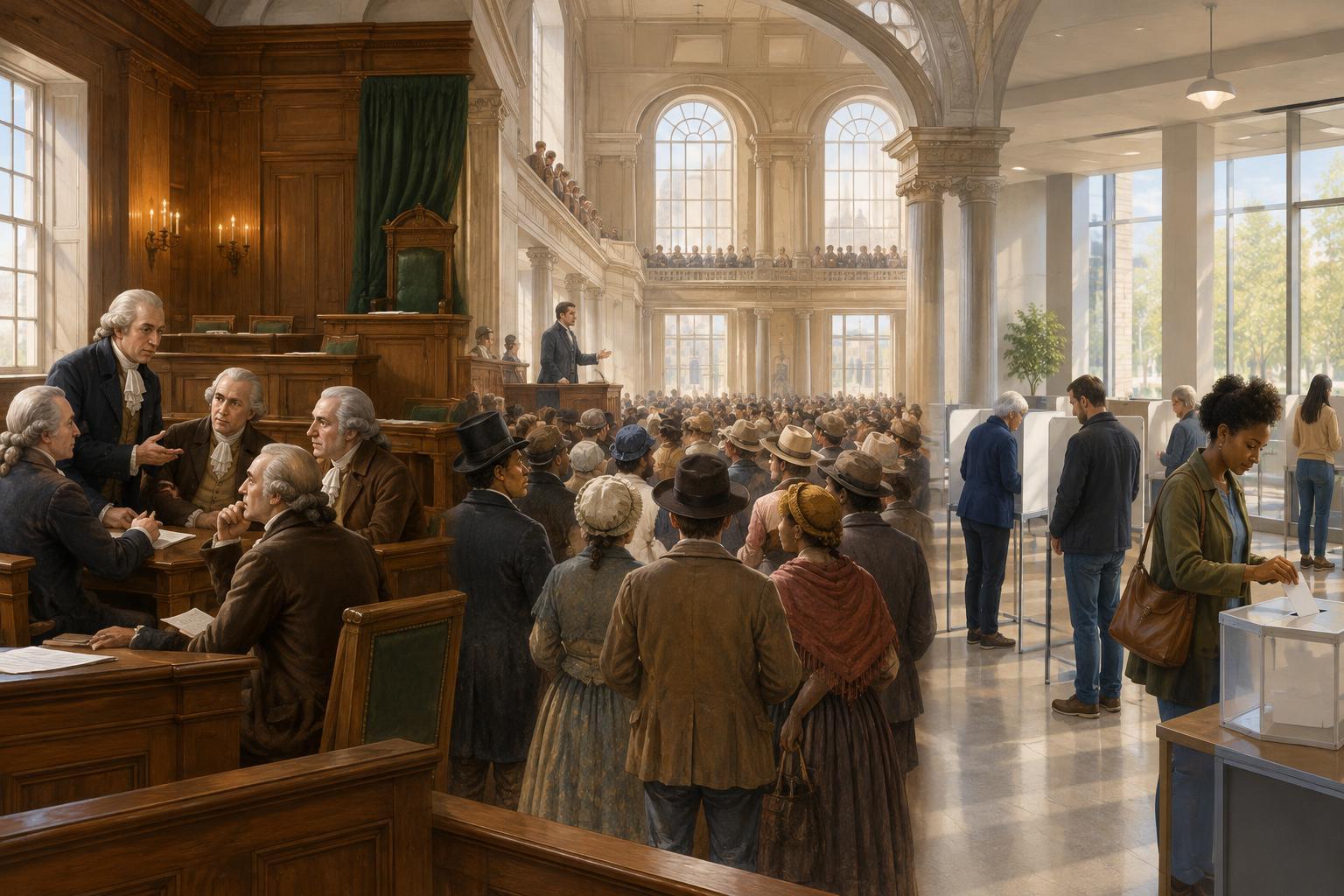
The more useful historical question is how authority moves and becomes accountable. Who can make laws, approve taxes, choose ministers and challenge officials? Who may vote or stand for office? Changes in these rules often occur at different times. A legislature can gain power long before most residents gain a voice in choosing it.
Limiting the ruler through laws and institutions
One path begins with restrictions on a monarch’s discretion. Rulers may accept agreements with nobles, towns or assemblies because they need revenue or support. Over time, procedures for approving taxes and debating laws can give those bodies a more durable role. Courts and written rules may also set boundaries on how rulers exercise power.
This is not necessarily a smooth march toward democracy. Early assemblies commonly represented narrow groups, and a monarch might retain significant influence over ministers or legislation. England’s long constitutional development illustrates how disputes over taxation, law and executive power could strengthen Parliament while leaving wider questions of voting and representation unresolved for later generations.
Reform, revolution and the replacement of regimes
Political change can also come through reforms to existing institutions. Legislatures may gradually gain control over government appointments and budgets, while voting rules expand through successive changes. Reform can preserve familiar offices even as the practical balance of power shifts. Its pace, however, depends on who has the ability and willingness to change the rules.
At other times, conflict produces a sharper break. Revolutions may remove a monarch, establish a new constitution or declare that political authority rests with the people rather than a dynasty. The French Revolution is a well-known example of a challenge to hereditary rule, but its outcomes changed repeatedly. Replacing a monarch does not by itself create stable representative government. New leaders still have to decide how elections work, how power is limited and whose participation counts.
Independence and new representative institutions
Another path runs through independence from an empire or distant ruler. Movements seeking self-government often create congresses, conventions or other bodies that claim to speak for a territory. After independence, constitution-makers may choose an elected republic, retain a monarch under new limits or build institutions that combine inherited practices with new arrangements.
Independence and representation should not be treated as identical achievements. A new government may be locally controlled but restrict political rights by property, gender or other criteria. It may also face difficult questions about which regions and communities have a say. To understand an independence movement’s legacy, it helps to examine both who gained authority and how broadly the new institutions shared it.
Why the paths remain visible today
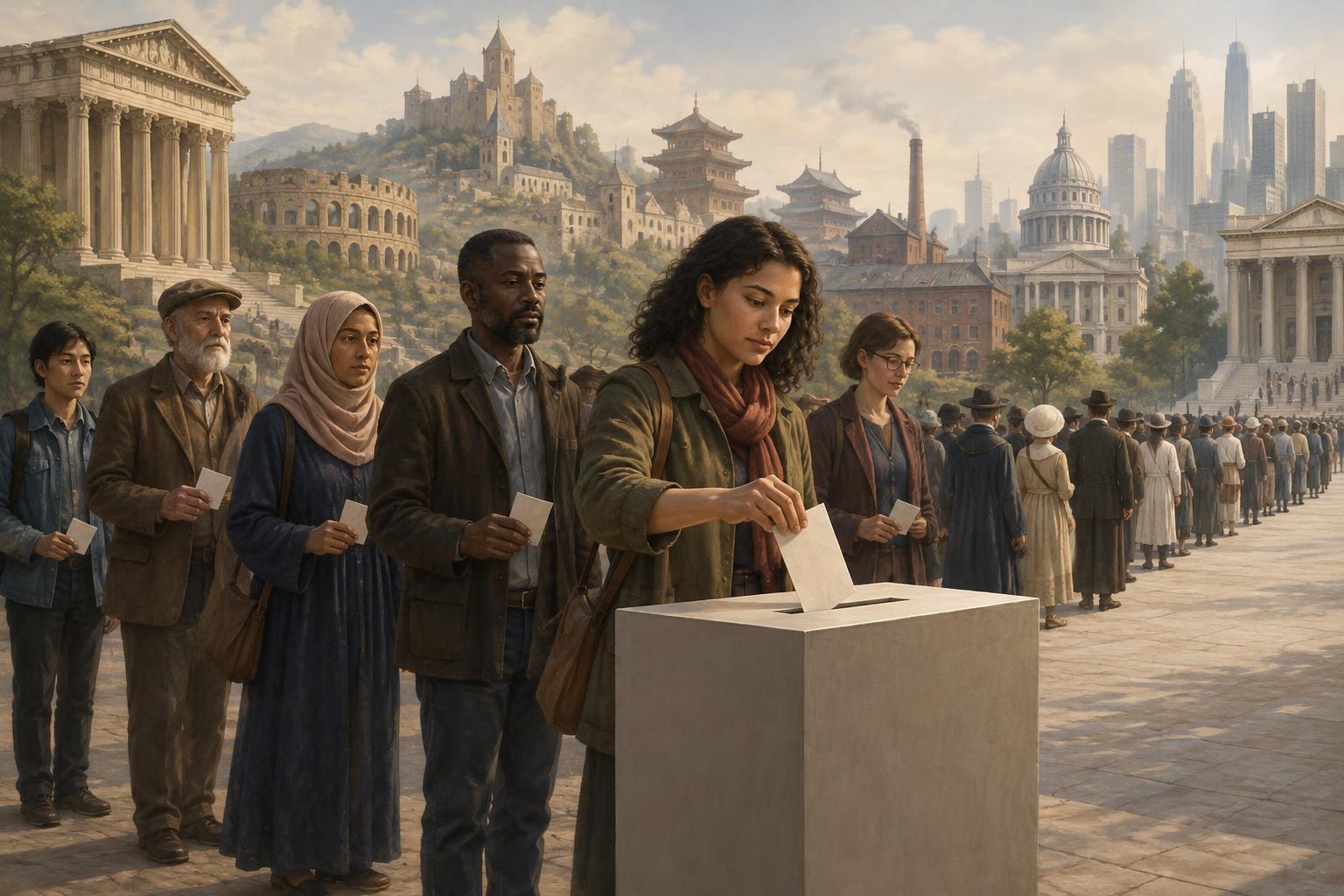
Transitions rarely follow a single sequence. War, economic pressures, organized movements and negotiations among political leaders can each shape the result. Institutions created for one purpose may acquire another: an assembly convened to approve taxes, for example, can become a place where ministers are questioned and public policy is contested.
These histories help explain differences among present-day representative systems. Some retain ceremonial monarchs; others have elected heads of state. Some give legislatures a central role in forming governments, while others elect executive leaders separately. The labels alone reveal less than the rules governing accountability, political participation and the transfer of power.
When comparing political change across countries, start with concrete questions rather than assuming one universal route. Identify who exercised authority before a change, what events or agreements shifted it, who could participate afterward and which limits applied to the new leaders. That approach shows both the importance of representative institutions and the distance that has often remained between their founding and broad political inclusion.